

Last updated September 10, 2026
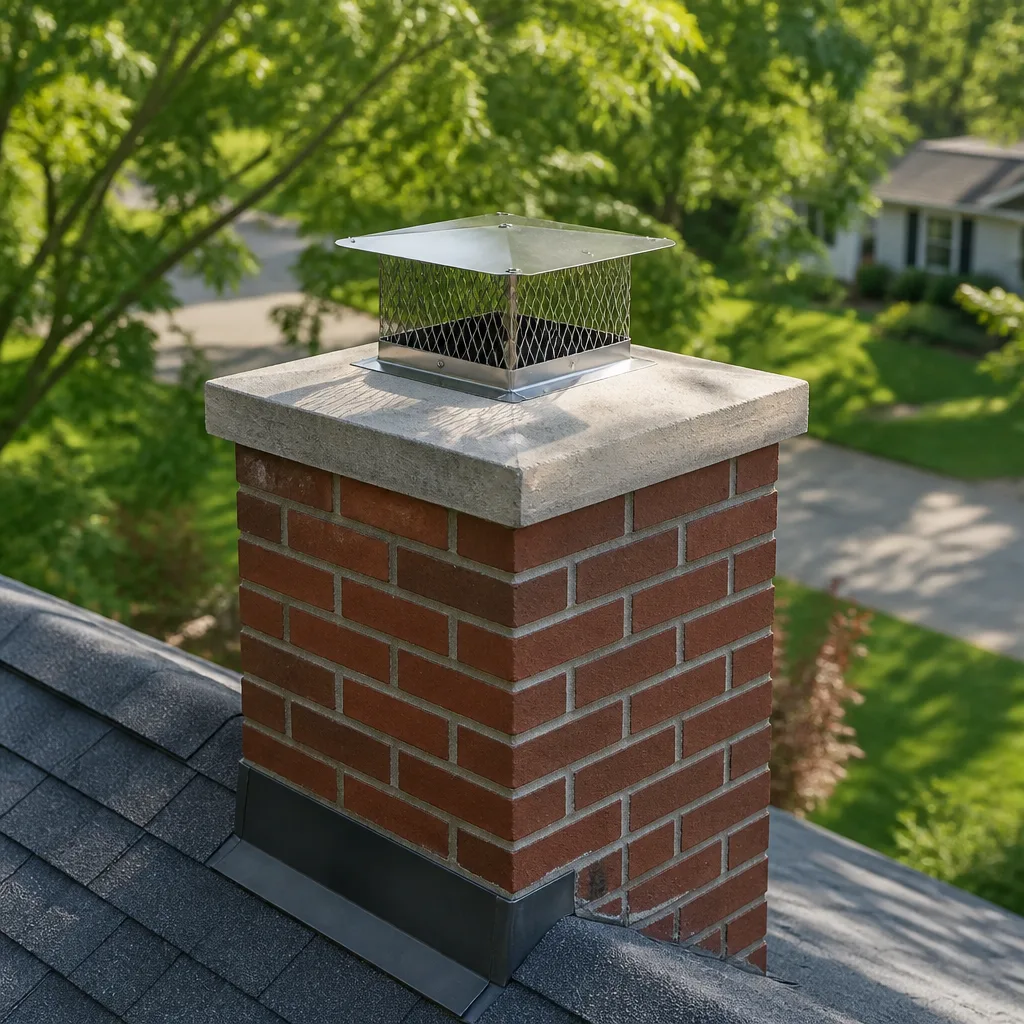
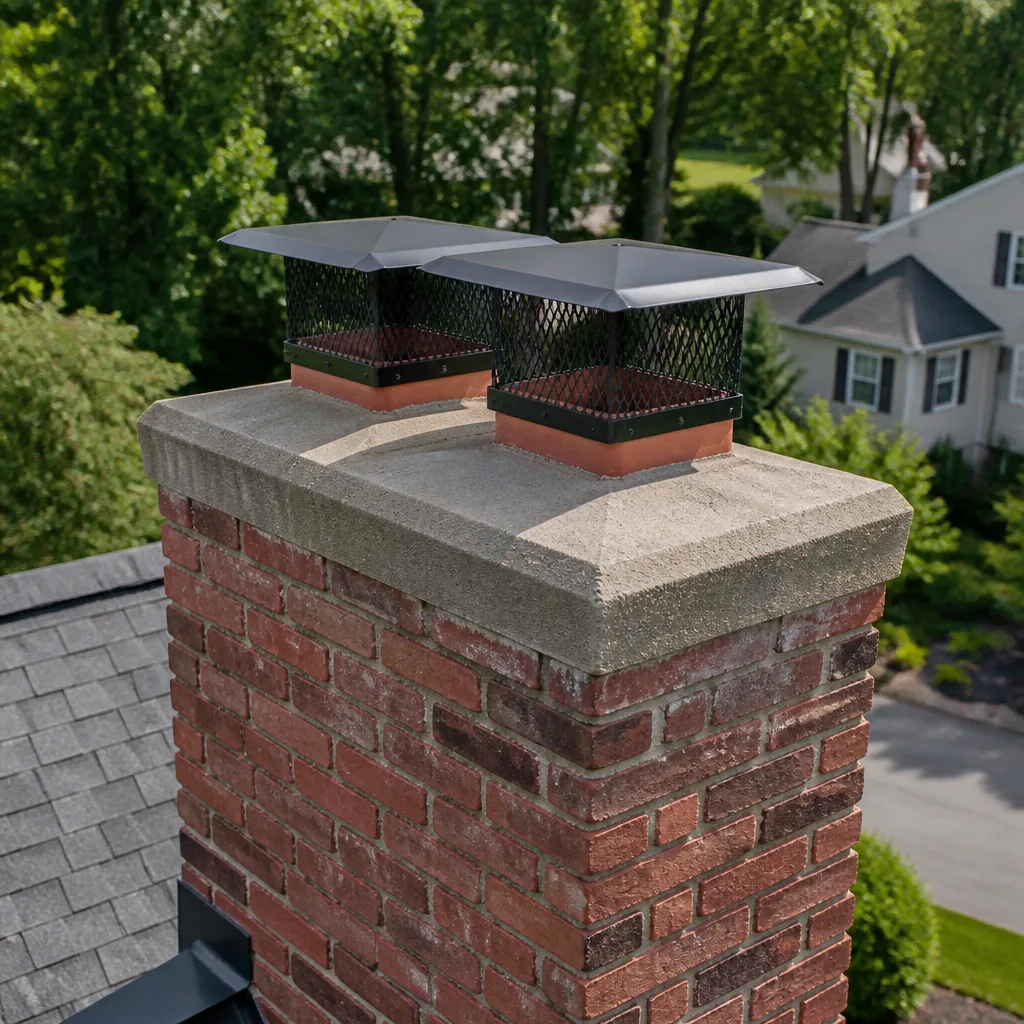
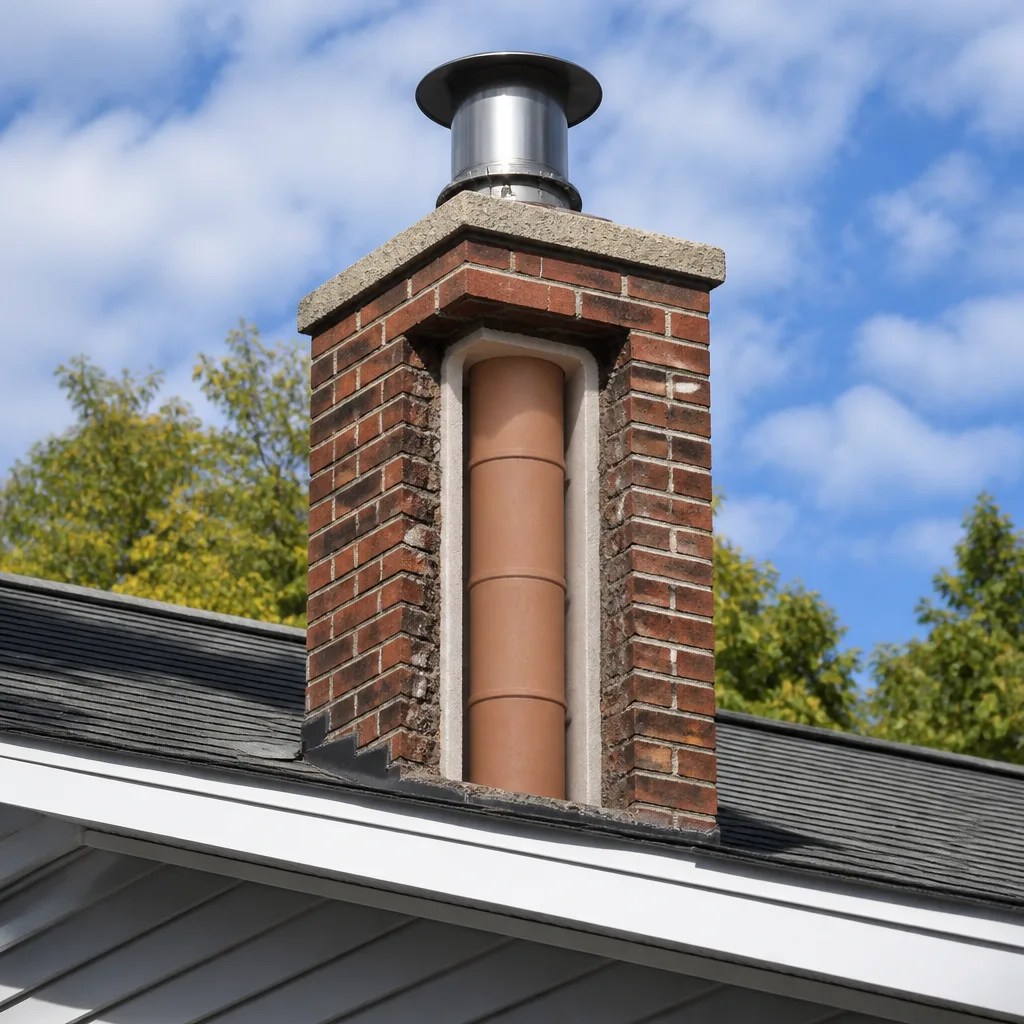
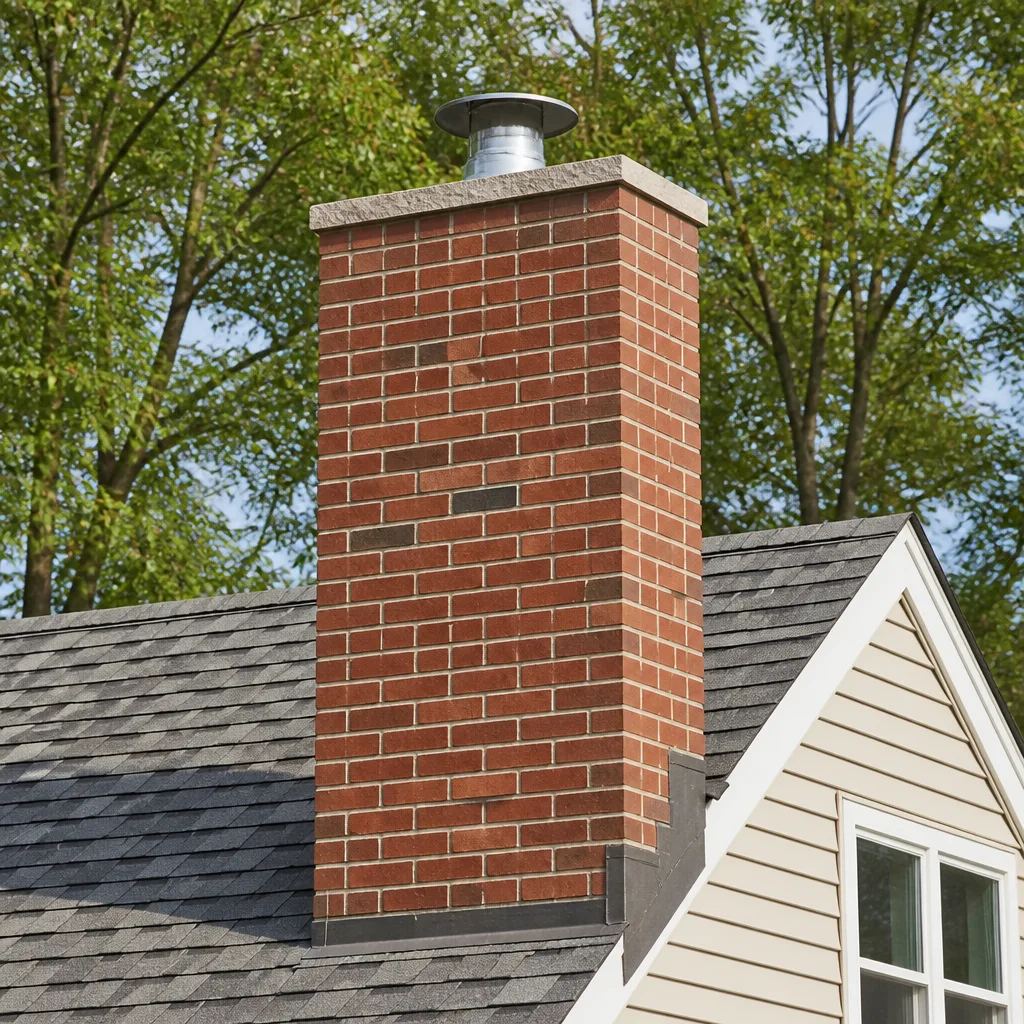
Level 1 sweep and inspection to the NFPA 211 annual standard - flue, crown, cap, and flashing checked and photographed
Chimney sweep logs do not sweep chimneys. They loosen some creosote - which then falls where a brush and vacuum still have to collect it.
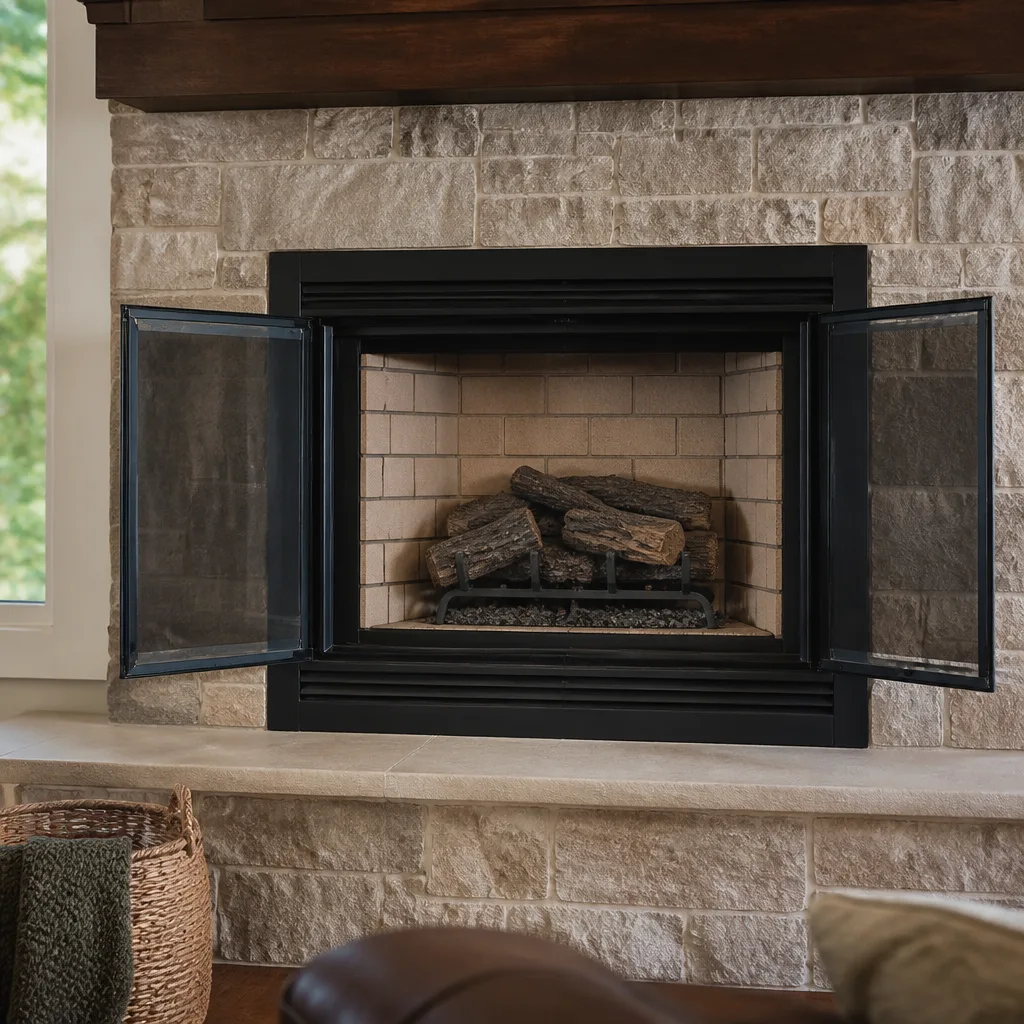
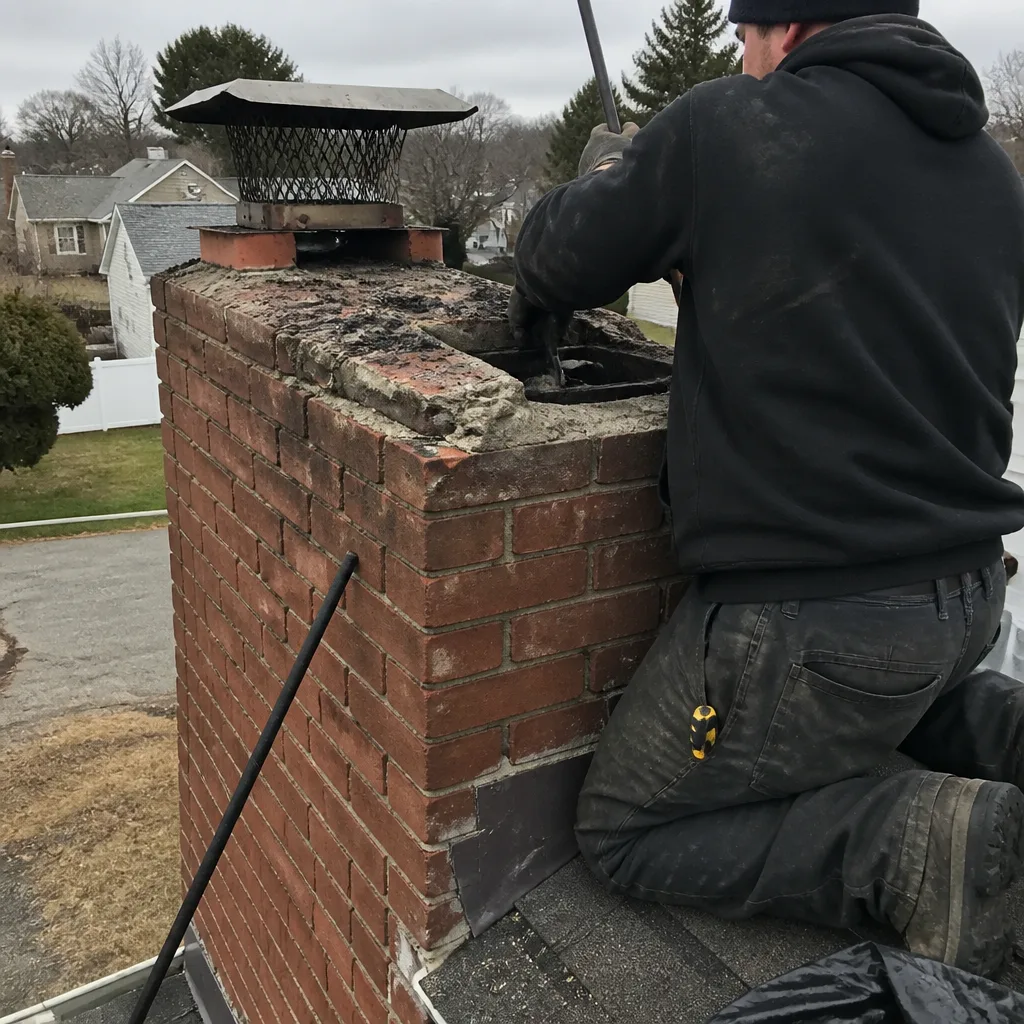 Before
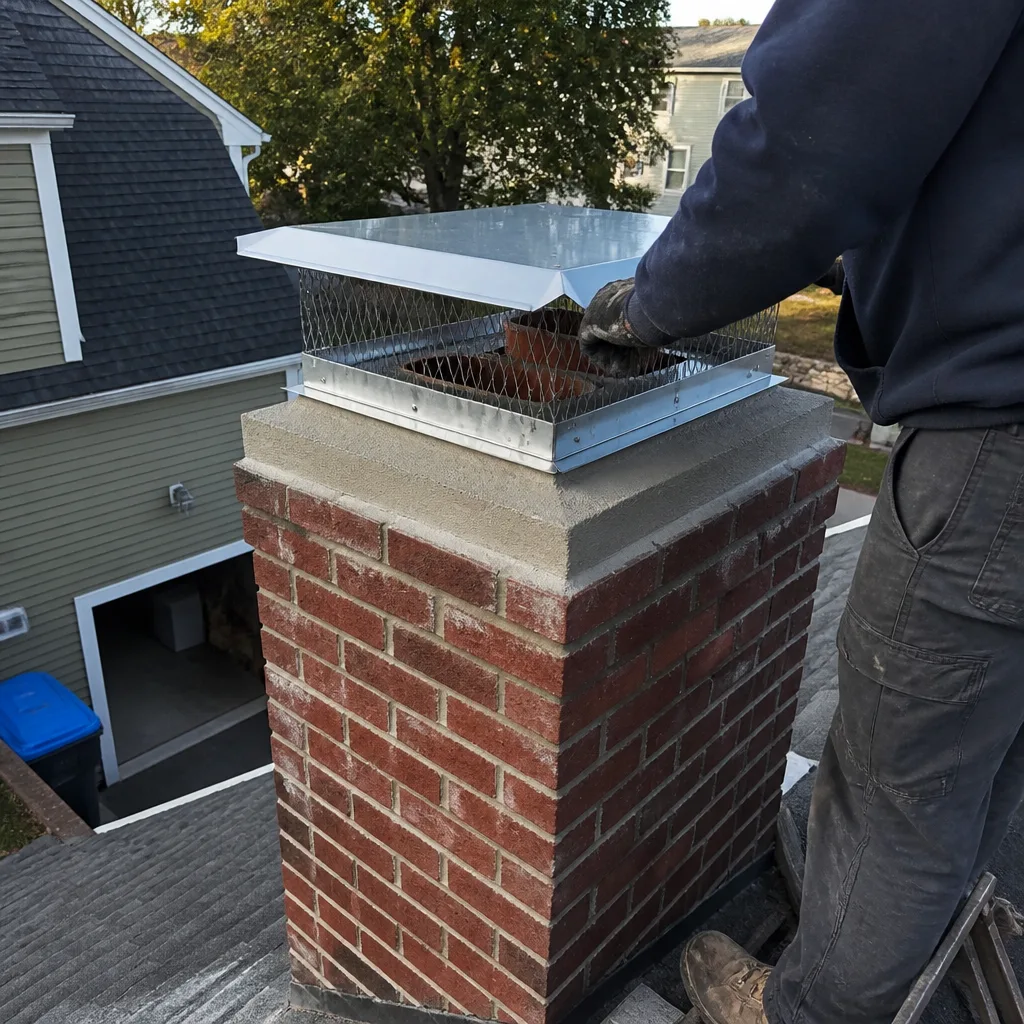 After
After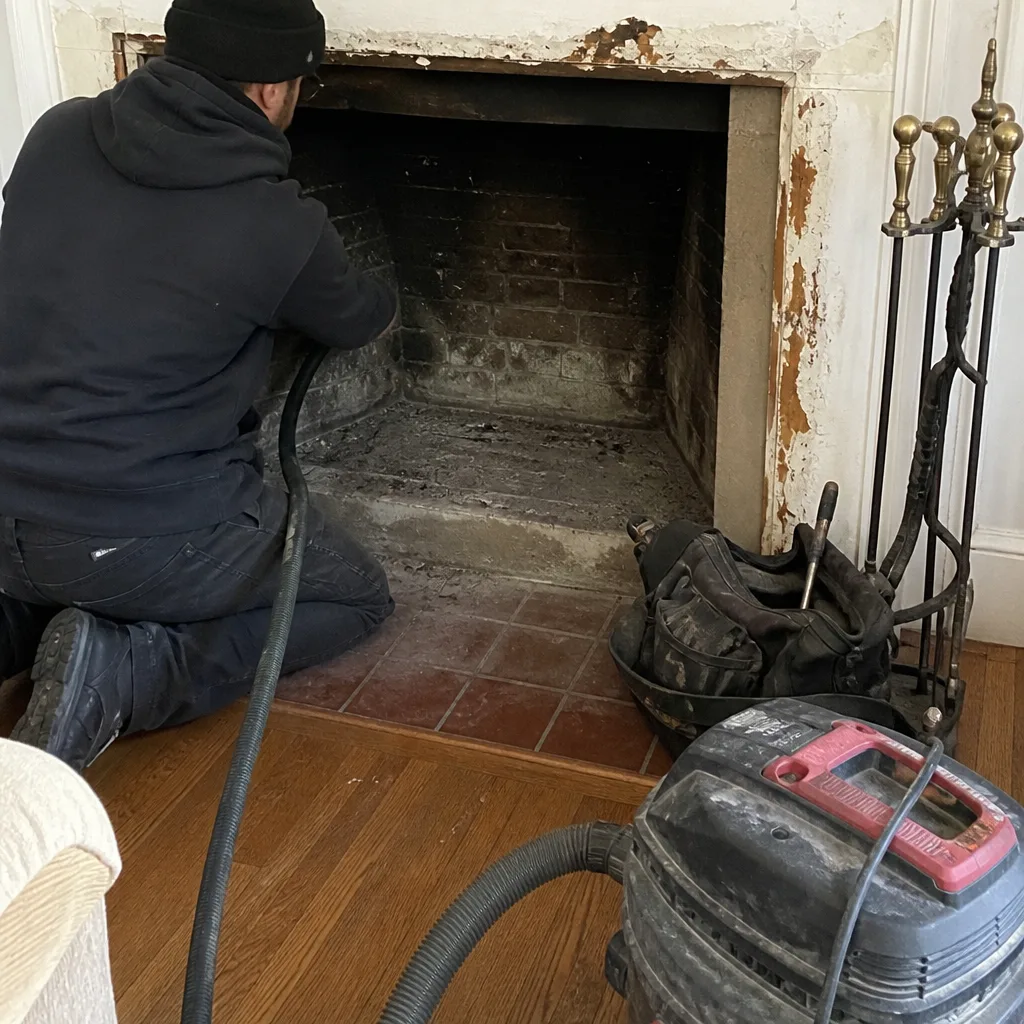 Before
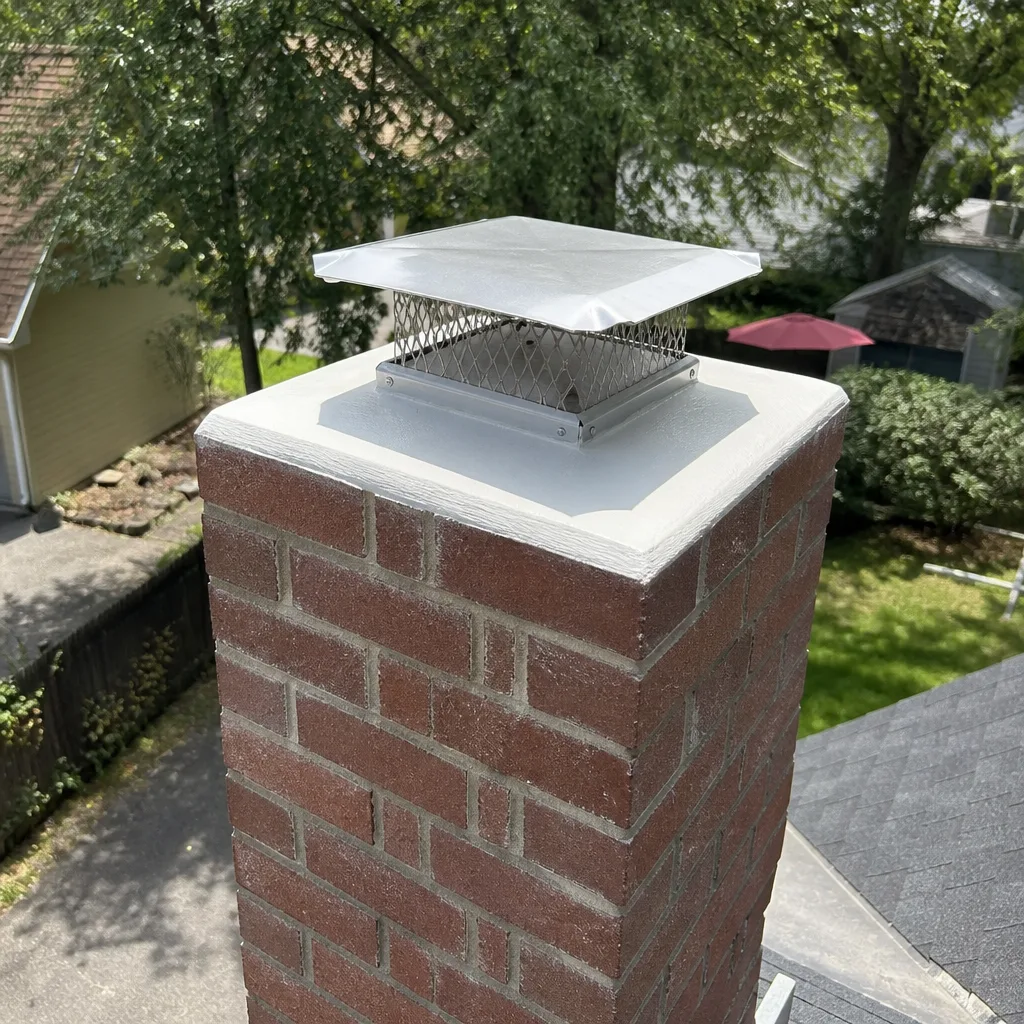 After
After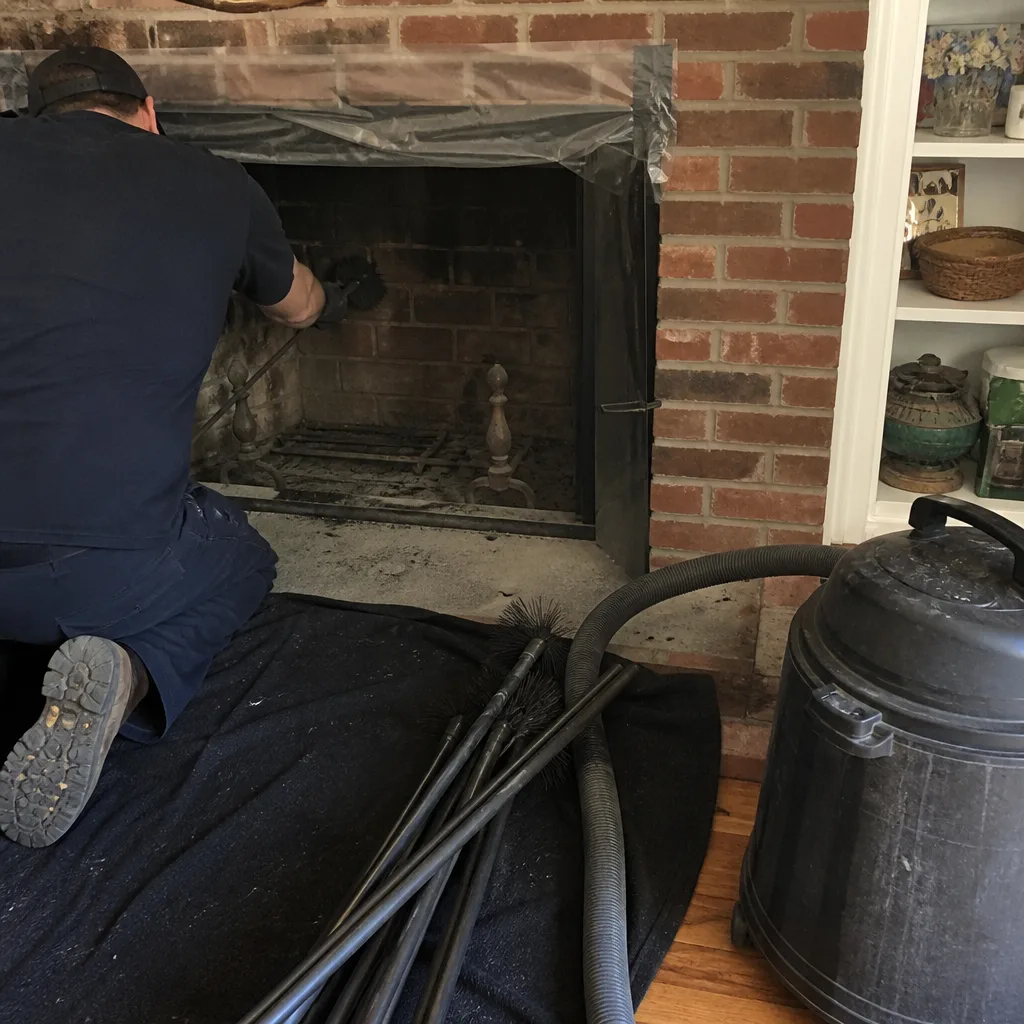 Before
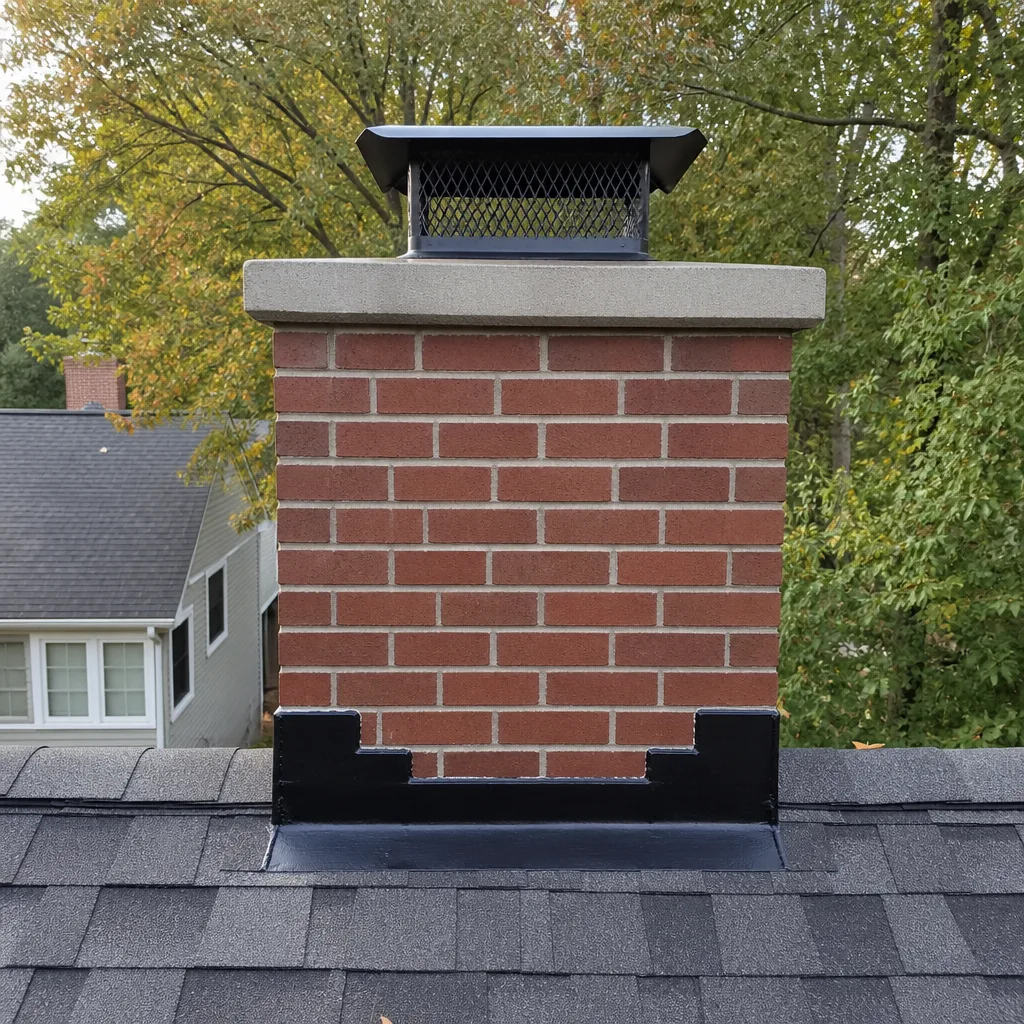 After
AfterChimney Cleaning Permits, Codes & Inspections in MA: What You Need to Know
Nobody pulls a permit to sweep a chimney. It’s a maintenance task, like changing your furnace filter or clearing your gutters. But the liner replacement the sweep recommends after the sweep? That’s a different story, and skipping the paperwork on it can void your homeowner’s insurance faster than you’d expect. Most homeowners in Quincy and across Massachusetts never think about chimney codes until something goes wrong. This guide-along with our Complete Guide to Chimney Cleaning in Quincy-walks you through exactly where the line sits between a routine cleaning and work that legally requires a permit, what your insurance policy actually says about unpermitted repairs, and how to ask a sweep the right questions before any work starts.
Quick Answer
Routine chimney sweeping and inspection does not require a permit anywhere in Massachusetts. However, any structural alteration to the chimney system, including liner replacement, flue rebuilding, or masonry repair beyond surface repointing, typically requires a building permit from your local building department. In Quincy, that means the Inspectional Services Department. When in doubt, ask the sweep to show you where your job falls under Massachusetts 527 CMR and the locally adopted NFPA 211 standard before the first tool comes off the truck.
Table of Contents
- What Massachusetts 527 CMR Actually Says About Chimneys
- NFPA 211 and How Massachusetts Adopts It
- When Quincy’s Building Department Needs to Be Involved
- The Real Line Between Cleaning and Repair
- How Unpermitted Chimney Work Affects Your Insurance
- What to Ask Your Sweep Before Any Repair Starts
- When Inspections Are Required and What They Cover
- Chimney Inspections During a Home Sale in Massachusetts
What Massachusetts 527 CMR Actually Says About Chimneys
Massachusetts 527 CMR is the state’s comprehensive fire prevention code. It’s a big document, most of it written for commercial buildings and industrial settings. But buried inside are provisions that apply directly to residential chimneys. The code distinguishes between maintenance, which a homeowner or a licensed sweep can do without paperwork, and alteration, which triggers the permitting process.
Here’s the distinction in plain terms:
- Maintenance includes sweeping, visual inspection, minor repointing of loose bricks at the surface, and replacing a damaged chimney cap. No permit needed.
- Alteration includes relining a flue, rebuilding any section of the chimney structure, changing the flue size or configuration, or replacing a firebox. Permit required.
- Repair versus replacement is the gray zone. Massachusetts 527 CMR 1-1.7 states that a permit is required for “the installation, alteration, or removal of any chimney, flue, or venting system” but not for “ordinary repairs” that don’t affect the structural integrity or fire safety of the system. A crack in a clay tile liner is not ordinary. A loose crown that needs a new pour is not ordinary.
The Department of Fire Services enforces 527 CMR at the state level, but the day-to-day business of permits falls to your town or city. In Quincy, that’s the Inspectional Services Department on Sea Street. They’re the ones who will tell you whether a HeatShield resurfacing job needs a permit or just a receipt. In our experience, most towns err on the side of requiring a permit for anything that touches the liner, because that’s the component that keeps combustion gases out of your walls.
What surprises a lot of homeowners is that the code treats your chimney and your furnace as part of the same system. If you have an oil burner venting through the same flue as your fireplace, the permit conversation gets more complicated. 527 CMR 12.00 covers heating appliance venting, and the requirements there are specific about liner sizing, clearances, and inspection after installation. A good sweep who knows Massachusetts code will flag this before recommending work.
NFPA 211 and How Massachusetts Adopts It
NFPA 211 is the national standard for chimneys, fireplaces, vents, and solid fuel burning appliances. It’s not a law on its own, but Massachusetts has adopted it by reference into the state building code and fire prevention code. That means a violation of NFPA 211 can be cited as a code violation, even if the language never appears in a Massachusetts statute.
The parts of NFPA 211 that matter most to a homeowner in Quincy are in Chapter 14, which covers maintenance. The standard says chimneys, fireplaces, and vents “shall be inspected at least once a year” and “cleaned and repaired as necessary.” It says creosote buildup of 1/8 inch or more requires cleaning before the appliance is used again. It specifies clearances from combustibles and requires that any chimney serving a solid fuel appliance be built with a liner that is “structurally sound and free of cracks, gaps, or deterioration.”
When a sweep tells you that your liner needs replacement because it fails a camera inspection, what they’re really saying is that it fails NFPA 211. The standard is specific: any crack in a clay tile liner that is visible at any depth is a defect. That’s not an opinion. That’s the benchmark against which your flue is measured.
The Massachusetts Board of Building Regulations and Standards updates the state building code on a roughly three-year cycle, and each revision incorporates the current edition of NFPA 211. So when the standard changes, Massachusetts code changes with it. Older homes in Quincy, particularly the colonials and capes built between 1920 and 1960, often have unlined or thinly lined flues that were legal when they were built but would never pass inspection today. That’s the gap between grandfathered design and current code, and it’s where a lot of repair recommendations start.
Here’s how the year-inspection recommendation plays out in real terms:
- Wood-burning fireplace used regularly: sweep every cord burned or once a year, whichever comes first.
- Wood-burning fireplace used occasionally (under a cord a season): at least once a year, even if the firebox looks clean from below.
- Gas fireplace with a vented chimney: annual inspection to check for moisture intrusion and liner separation. These burn dirty even though the glass stays clean.
- Oil furnace venting through a masonry chimney: annual inspection, because oil soot is acidic and corrodes mortar joints faster than wood creosote does.
The reason we keep saying “once a year, burn or no burn” is that rain, frost, and wind do their own damage. A chimney that hasn’t been inspected in five years may look fine from the street and be hiding a foot of missing mortar at the crown. NFPA 211 recognizes this by making inspection independent of usage.
When Quincy’s Building Department Needs to Be Involved
Quincy issues building permits through the Inspectional Services Department. For chimney work, the trigger for a permit is generally any structural alteration to the masonry or the flue system. Here’s what that means in practice for a house in Wollaston, Houghs Neck, or Quincy Point.
If your sweep says you need a new liner, that’s a permit job. The liner is part of the chimney system, and replacing it changes the condition of that system. Quincy requires a building permit for liner replacement whether the liner is stainless steel (like the DuraFlex or Copperfield liners we install) or a resurfaced system like HeatShield. The permit does two things: it creates a record that the work was done, and it schedules an inspection to verify the installation meets current code.
Repointing a few loose bricks on the exterior stack? In most cases, that’s ordinary repair and doesn’t need a permit. Rebuilding the top five courses of brick because the crown failed and water has been getting in? That’s alteration, and Quincy wants to see a permit. The distinction in the building department’s eyes is whether the repair changes the structural characteristic of the chimney. Loose bricks are a maintenance annoyance. A rebuilt stack is a structural event.
What unfolds if you skip the permit in Quincy is predictable. The city requires a Certificate of Compliance for any permitted work. When you sell the house, the buyer’s attorney will ask for it. If you can’t produce it because the liner was replaced without a permit, you have a title problem. The work might be fine. But the paper trail doesn’t exist, and that spooks lenders and insurance underwriters. We have seen more than one home sale in Quincy held up over unpermitted chimney work that happened years before the owners ever thought about selling.
The practical rule for a homeowner in Quincy is simple: ask the sweep, or ask the building department. A phone call to Inspectional Services takes five minutes. The department will tell you whether your specific job needs a permit. Getting the answer wrong because you didn’t ask costs more than any permit fee.
The Real Line Between Cleaning and Repair
This is where most homeowners get into trouble. A sweep comes out, does the cleaning, and then says, “You’ve got a cracked tile. You need a new liner.” That recommendation is the moment the job shifts from a maintenance visit to a permitted alteration. If the sweep then offers to do the liner replacement without pulling a permit, you’re not getting a bargain. You’re inheriting a liability.
Let’s be precise about which tasks fall on which side of the line. Here’s a list for a typical Massachusetts home:
- No permit needed: chimney sweeping, visual inspection, camera inspection, minor repointing of loose surface bricks, replacing an existing cap with a like-for-like unit, applying a water repellent sealant to the crown.
- Permit needed in most Massachusetts towns, including Quincy: installing a new stainless steel liner, removing and replacing a damaged clay tile liner, rebuilding the firebox, rebuilding the smoke chamber, rebuilding any portion of the chimney stack, changing the size of the flue, converting from a wood-burning fireplace to gas inserts with a different venting path, and installing or replacing a masonry crown when the repair involves rebuilding the top course of brick.
- Gray zone, worth asking your building department: HeatShield resurfacing of an existing liner, regrouting and resetting loose firebrick in the firebox, replacing a damper that requires cutting into the masonry, and repair of a smoke chamber that requires accessing it from above.
The reason HeatShield is a gray zone is that it doesn’t replace the liner. It resurfaces the existing flue with a ceramic coating. In some towns, it’s treated as a repair because the original structure stays in place. In others, it’s treated as an alteration because the flue surface is changed. Our experience in Quincy has been that the building department wants to see a permit for HeatShield when the original liner was damaged enough that resurfacing is recommended in the first place. The permit protects you as much as it satisfies the city.
Another way to think about the line: is the work restoring the chimney to its original condition, or is it changing what the chimney is? A sweep restores. A liner replacement changes the flue you had into a flue you didn’t have. Massachusetts code treats the second as alteration. That’s the entire distinction in two sentences.
How Unpermitted Chimney Work Affects Your Insurance
Here’s where it gets expensive. Homeowner’s insurance policies in Massachusetts almost universally contain language about unpermitted work. The exact wording varies by carrier, but the clause you’re looking for usually appears in the property coverage section under “Exclusions” or “Conditions.” It reads something like this:
“We do not cover loss caused by faulty, inadequate, or defective design, workmanship, construction, or repair, unless the work was performed in compliance with applicable building codes and the appropriate permits were obtained.”
Some policies are broader and exclude loss directly resulting from any work performed without a required permit, even if the work itself was not the cause of the fire. The practical version: if your chimney liner was replaced without a permit and a fire starts in the flue, your insurance company has a legal basis to deny the claim. They will investigate. They will find the unpermitted liner. And their adjuster will cite the exclusion language.
A chimney fire is not a small insurance event. The average chimney fire claim in Massachusetts runs between $12,000 and $30,000 when you factor in the flue damage, the smoke damage to the house, and the remediation work. In a worst case, where the fire escapes the chimney and gets into the framing, claims can exceed $100,000. No homeowner wants to stand in the backyard watching a fire truck while thinking about a permit they skipped to save $150.
Massachusetts is also one of the states where insurance carriers have been tightening fireplace and wood stove underwriting in the last few years. Some carriers now require proof of an annual chimney inspection before they’ll write or renew a policy on a home with a solid fuel appliance. Others ask specifically for a WETT or CSIA inspection report. If you can’t produce one, you may face a higher premium or a nonrenewal. This is not a hypothetical. We hear about it from homeowners in Quincy and the surrounding South Shore towns regularly.
Here’s the specific language to look for when you read your policy:
- Open your policy declaration page and find the “Exclusions” section.
- Look for any paragraph that mentions “ordinance or law,” “permits,” “building code compliance,” or “faulty workmanship.”
- Read it carefully. If the words “permit” or “building code” appear, assume your unpermitted chimney work is at risk of being excluded from coverage.
- Call your agent and ask the direct question: “If I replace my chimney liner, do I need to pull a permit for my coverage to stay valid?” Get the answer in writing.
The conversation with your agent is free. The claim denial is not.
What to Ask Your Sweep Before Any Repair Starts
A homeowner in Quincy who gets a repair recommendation needs to know what they’re actually being sold. Here are the five questions that separate a straightforward job from a surprise. These are the same questions we get asked by the sharpest homeowners we work for, and they deserve straight answers.
- “Is this job a permit job in my town?” A sweep who knows Massachusetts code will give you an answer that matches what Inspectional Services says. If they wave it off and say nobody pulls permits for liners, call the building department yourself. The answer is five minutes away.
- “Can you show me the camera footage?” A cracked flue tile is a visible thing. A deteriorated mortar joint is a visible thing. Any sweep who recommends a liner replacement should be able to put the camera on a screen and point to exactly what they’re seeing. The camera footage and a plain-English verdict, every time, no exceptions. If a repair recommendation comes without visual evidence, get a second opinion.
- “Does your quote include the permit fee and the inspection scheduling?” A thorough sweep includes the permit in the quote. If the quote is suspiciously low, ask whether the permit is included. Some companies price the job without the permit to win the work, then tell you it’s your responsibility to get it. That’s a headache you don’t want.
- “Who performs the work, you or a subcontractor?” In Massachusetts, a licensed contractor who pulls a permit is responsible for the work that happens under it. If the sweep is going to sub the job out, you want to know who handles the permit and whose insurance covers the crew on your property.
- “What happens if the inspection fails?” A legitimate sweep has a plan for that. The fix gets made, the inspector comes back, and the permit gets closed. If the answer is vague, you’re not working with a professional.
We tell every homeowner in Quincy the same thing: the sweep who shows up at your door should be the same person who answers these questions without blinking. Wendell and his crew have been pulling permits in this city since 1999. The paperwork is not the hard part. Knowing the code well enough to tell you the truth about what you need is the hard part.
When Inspections Are Required and What They Cover
Inspection requirements flow directly from the permit. Pull a permit for a liner replacement in Quincy, and the building department will send an inspector when the work is complete, before the fireplace goes back into service. The inspector checks that the installation matches what the permit described, that the materials match what was specified, and that the finished flue meets Massachusetts code and NFPA 211.
For most residential liner installations, the inspection covers three things:
- Proper sizing: the liner diameter has to match the appliance it serves. An oversized liner cools the flue gases too quickly and accelerates creosote buildup. An undersized liner chokes the draft and sends smoke into your living room.
- Connection integrity: the liner must connect cleanly to the appliance outlet at the bottom and terminate correctly at the top. This is where the inspector looks for gaps, misaligned sections, and poor sealing.
- Clearance and termination height: the chimney top needs to extend far enough above the roofline to meet code. The rule of thumb is 3 feet above the highest point where the chimney passes through the roof, and at least 2 feet higher than any structure within 10 feet. A chimney that’s too short drafts poorly and pulls smoke back into the house.
A fire marshal inspection is a different thing. In Massachusetts, the local fire department can inspect a chimney after a chimney fire, regardless of whether a permit was involved. If a chimney fire occurs, the fire department will typically require that the chimney be inspected and cleaned before the fireplace is used again. They may also issue a cease-and-desist on the appliance until the inspection is done. This is a public safety function, not a building permit function. The fire department does not need a permit to inspect your chimney. They have the authority to do it, and they will.
The sequence for a typical liner job in Quincy runs like this: sweep performs the camera inspection and finds the damage; you authorize the repair; the permit application goes to Inspectional Services; the permit is issued; the liner goes in (this is a one-day job for most single-story flues); the inspector comes through and signs off; the permit is closed. Then, and only then, is the fireplace ready for the season.
Chimney Inspections During a Home Sale in Massachusetts
Real estate transactions are where the permit question bubbles up. In Massachusetts, a home inspector who flags the chimney will usually recommend a Level 2 inspection by a qualified chimney professional. That Level 2 inspection includes a camera scan of the flue interior. If the camera reveals a cracked liner, the buyer’s attorney will almost certainly ask for a repair credit or a completed repair before closing. And because the repair involves the liner, the permit question is now on the table during the transaction.
Buyers in this market are smart. They will ask for the Certificate of Compliance for any chimney work done in the last several years. If the sellers can’t produce it, the deal gets more complicated. The closing may be delayed while a permit is retroactively pulled, which is possible in Massachusetts but not always simple. Or the buyer may ask for a price reduction to account for the unpermitted work. Either way, the seller pays more than the permit would have cost.
For an older home in Quincy, the chimney is often one of the first things a buyer’s inspector flags. These houses have been through decades of freeze-thaw cycles, and the masonry shows it. A crack in the crown lets water into the flue. The water speeds up liner deterioration. The deterioration shows up on the camera inspection. The buyer’s attorney writes a letter. The seller is now dealing with a repair, a permit, and an inspection, all under closing deadline pressure. This is avoidable if the seller had a sweep done before listing the house. But most homeowners don’t think about the chimney until it’s someone else’s problem.
Common Mistakes to Avoid
- Assuming all chimney work is the same under the code. A sweeping is not a liner replacement. The permit requirement changes the moment the flue itself gets altered.
- Skipping the permit to save money. The permit fee on a liner job in Quincy runs under $200. The insurance claim denial for an unpermitted liner fire can run into six figures. The math doesn’t work in your favor.
- Hiring a sweep who won’t show camera footage. A cracked liner is a visual finding. If the sweep tells you there’s damage but won’t show you the film, you don’t have a diagnosis. You have a sales pitch.
- Ignoring the annual inspection because the fireplace “works fine.” A chimney can look fine from the outside and be three seasons past safe on the inside. First-degree creosote is a brush job. Third-degree is a glaze. Catch it early.
- Replacing a liner without a permit and then selling the house. The buyer’s attorney will find the missing permit. The deal will get harder. The cost of fixing it at closing is higher than the cost of doing it right the first time.
- Waiting for a chimney fire to take the chimney seriously. A chimney fire is not a routine event. It is a warning that your flue was already in trouble. After a fire, the repair is always bigger, and the insurance conversation is always harder.
- Assuming a gas fireplace doesn’t need the same attention. Gas fireplaces vent through chimneys that still get wet, still crack, and still deteriorate. The liner inspection matters just as much.
When to Call a Professional
Here’s the short version: any time the recommendation moves from cleaning to repair, you need a professional who knows the Massachusetts code. That means a licensed, insured sweep who can pull the permit, manage the inspection, and produce the paperwork when it’s done. A cracked crown after a hard winter in Quincy doesn’t get better with another season of rain. A third-degree creosote glaze needs the kind of removal nobody should attempt from the roof with a brush. And any liner replacement, in any town in Massachusetts, is a permit job. If the sweep says otherwise, that’s your cue to get a second opinion. Top Hat Chimney offers free estimates in Quincy, and second opinions on any written estimate, always free. Call (781) 277-4630 and Wendell or one of his crew will talk it through with you honestly.
Frequently Asked Questions
No. Routine chimney sweeping and visual inspection are considered maintenance and do not require a permit anywhere in Massachusetts, including Quincy. The permit requirement kicks in when the work moves beyond maintenance into alteration, such as liner replacement or structural rebuilding.
Yes. Replacing a chimney liner, whether with stainless steel like a DuraFlex or Copperfield system or with a resurfacing product like HeatShield, is structural alteration of the flue. Quincy’s Inspectional Services Department requires a building permit for this work, and the installation must pass inspection before the fireplace returns to service.
You risk two things. First, your homeowner’s insurance may deny a claim related to the chimney because of the unpermitted work exclusion. Second, when you sell the house, the missing Certificate of Compliance will complicate the closing. The buyer’s attorney will ask for it. The permit costs less than $200 in most Massachusetts towns. The trouble it prevents is worth far more.
Not by statute, but NFPA 211, which Massachusetts adopts into its fire prevention code, calls for annual inspection and cleaning as necessary. Insurance carriers are increasingly asking for proof of inspection before writing homeowner’s policies on homes with fireplaces or wood stoves. The practical answer is that annual inspection is the standard. For year-round guidance, visit our more guides & resources.
A Level 1 inspection is visual and appropriate when the chimney is in regular use and nothing about the system has changed. A Level 2 inspection includes a camera scan of the flue interior and is required when the property is changing hands, after a chimney fire, or after any event that could have damaged the flue. In Quincy, a home sale typically triggers a Level 2 inspection recommendation from the home inspector.
A standard chimney sweep and inspection in Quincy typically runs $180 to $300 for a single-flue residential chimney with no major issues found. The price moves up if the creosote buildup is heavy, the flue is unusually tall, or the sweep includes a camera inspection. Call (781) 277-4630 for an exact quote. Estimates are free, and the number quoted on the phone is the number on the invoice.
The Bottom Line
Chimney cleaning in Massachusetts is a maintenance task. Chimney repair is a building code event. The line between them is where the permit conversation lives, and it is not a line any homeowner should guess at. A sweep tells you they found damage. That recommendation carries code obligations, insurance implications, and a paper trail that matters when you sell. The right approach is simple: ask the questions, see the camera footage, pull the permit when the law says to pull it, and work with a sweep whose name and license number you can verify. Wendell Pike has been doing this work in Quincy since 1999, and the same rules apply to his own house as to yours. Once a year, burn or no burn. Chimneys break in the off-season too. Call (781) 277-4630 and ask us anything.
Written by Wendell Pike, Owner at Top Hat Chimney, serving Quincy since 1999.