
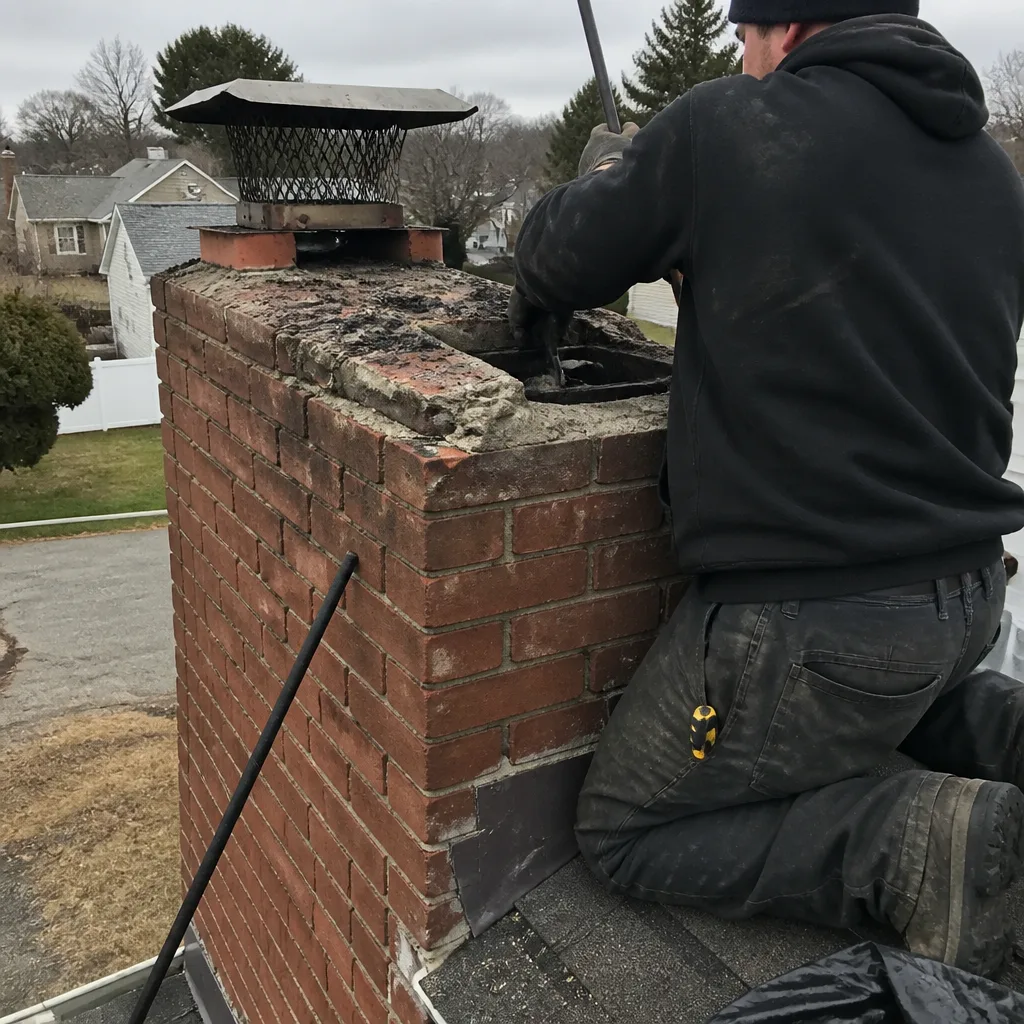
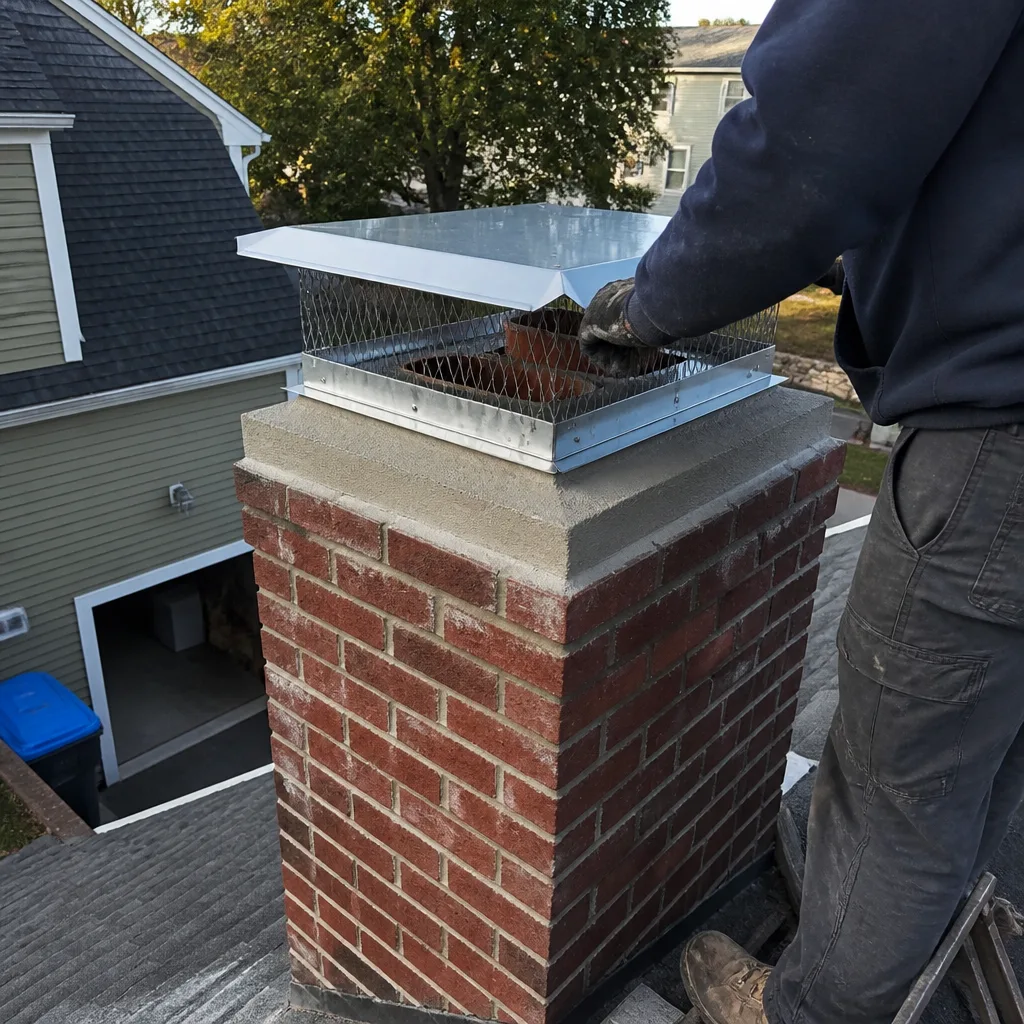
Level 1 sweep and inspection to the NFPA 211 annual standard - flue, crown, cap, and flashing checked and photographed
Chimney sweep logs do not sweep chimneys. They loosen some creosote - which then falls where a brush and vacuum still have to collect it.
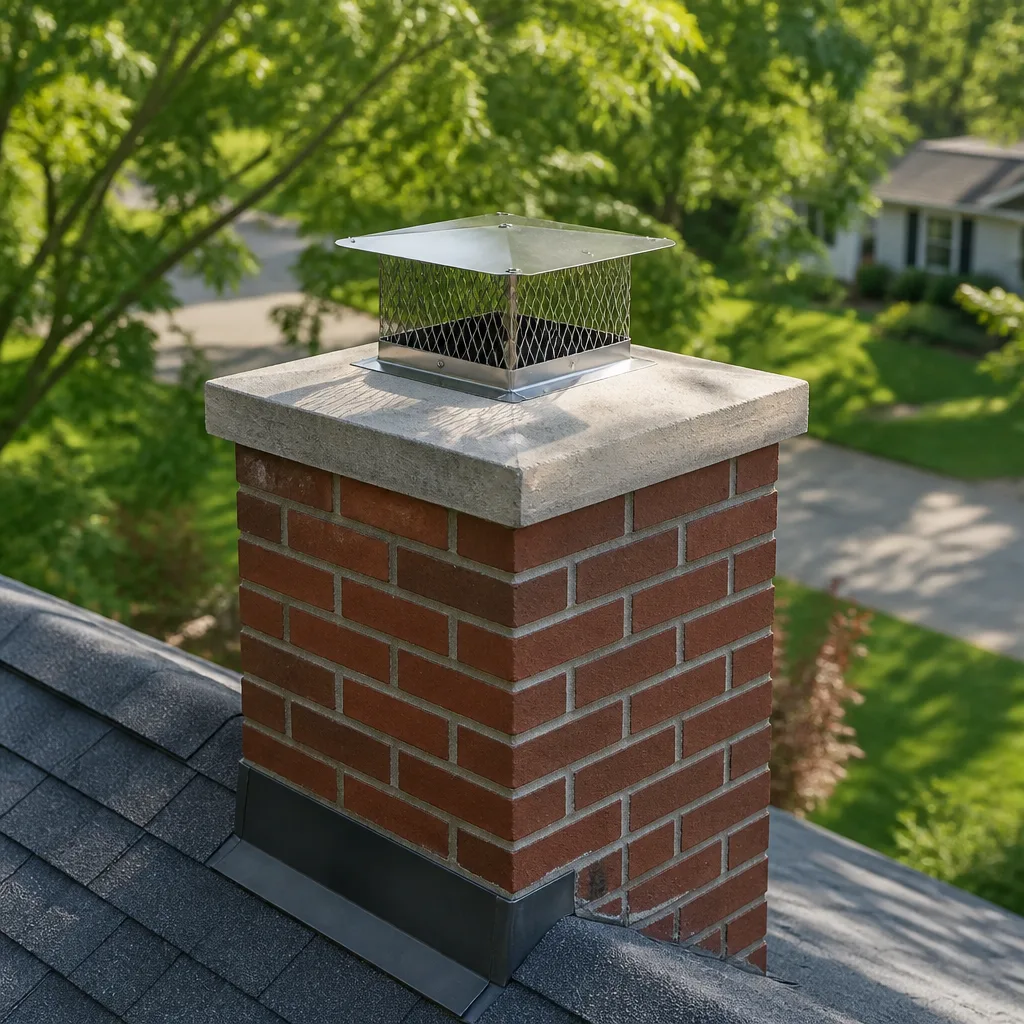
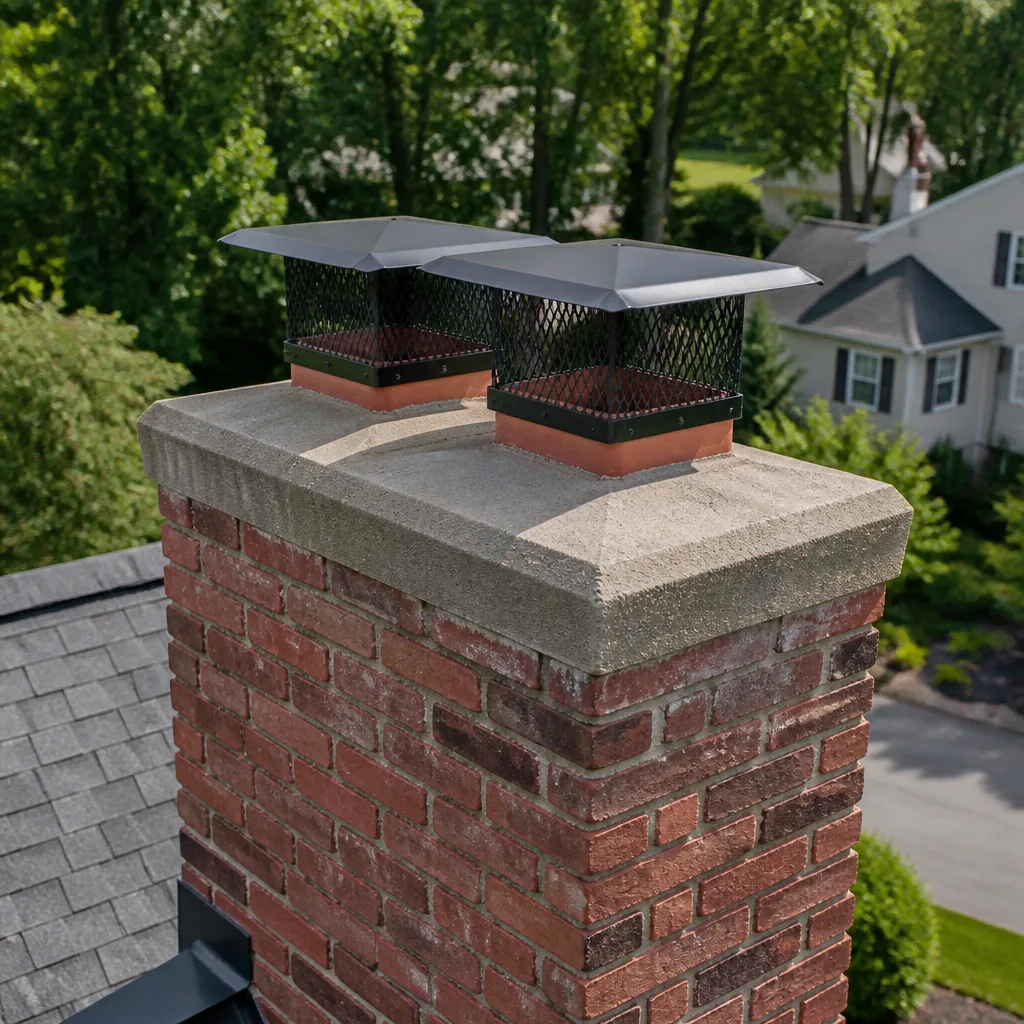
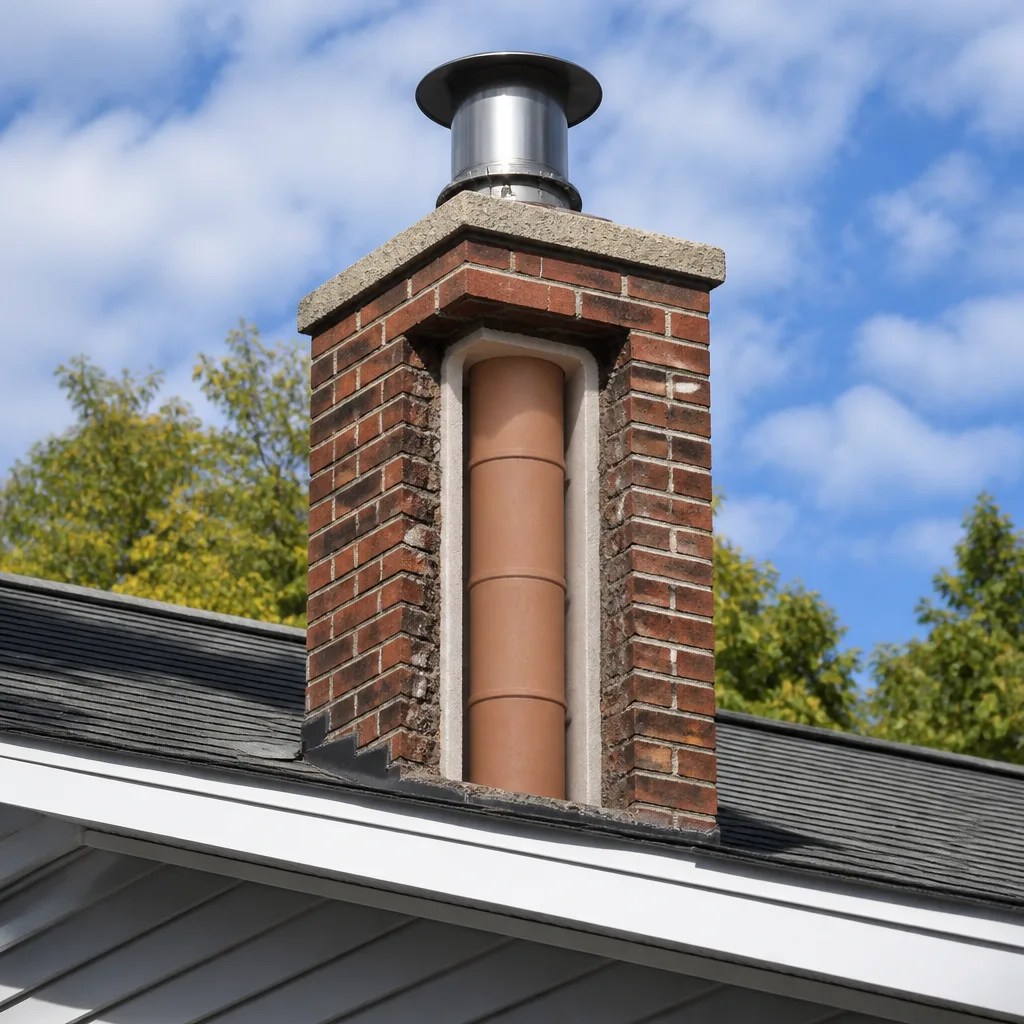
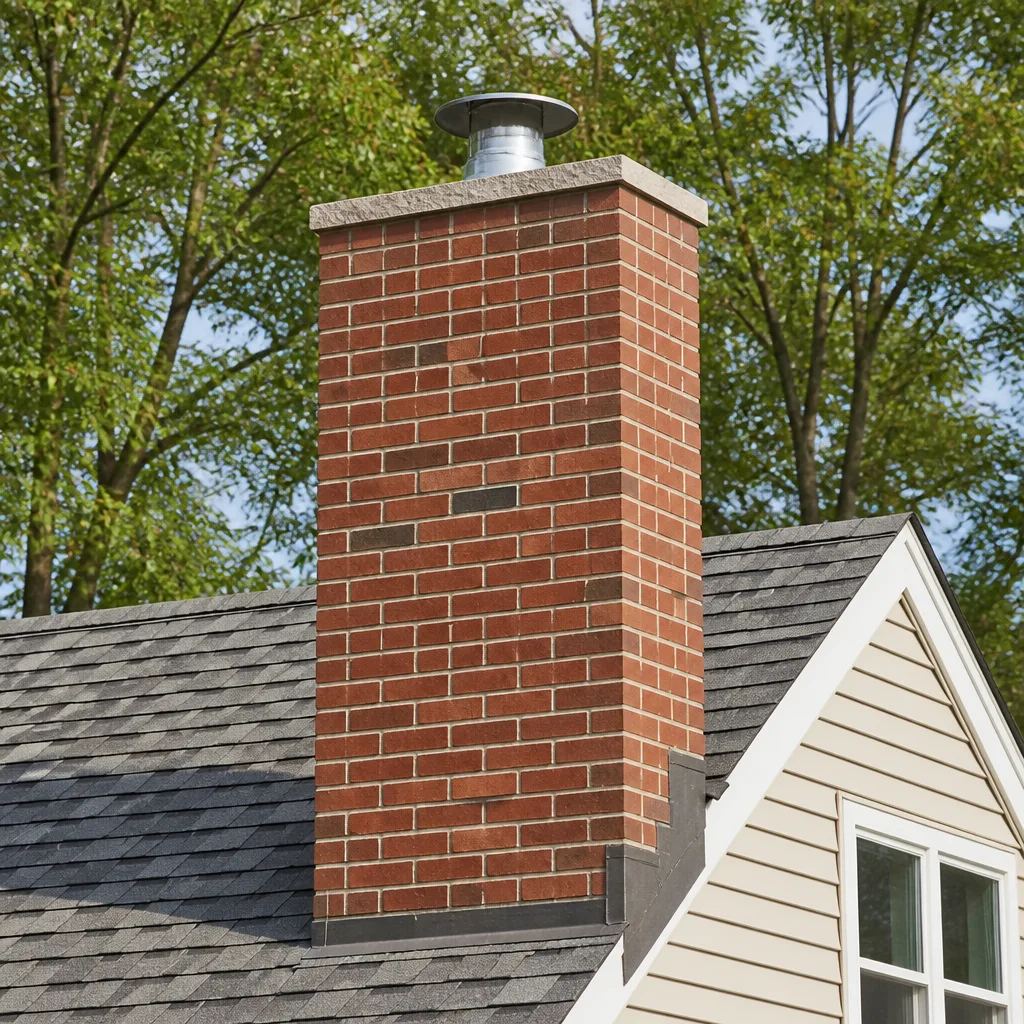
 Before
 After
After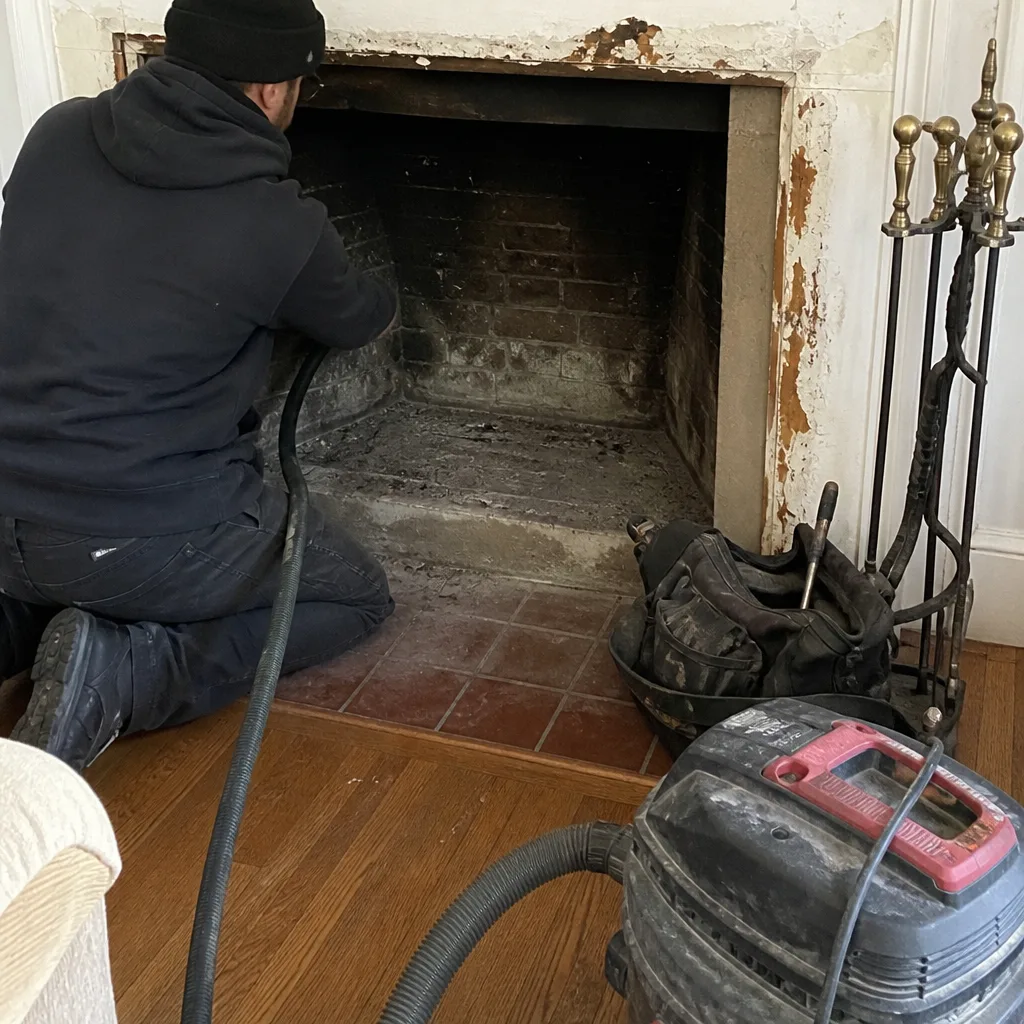 Before
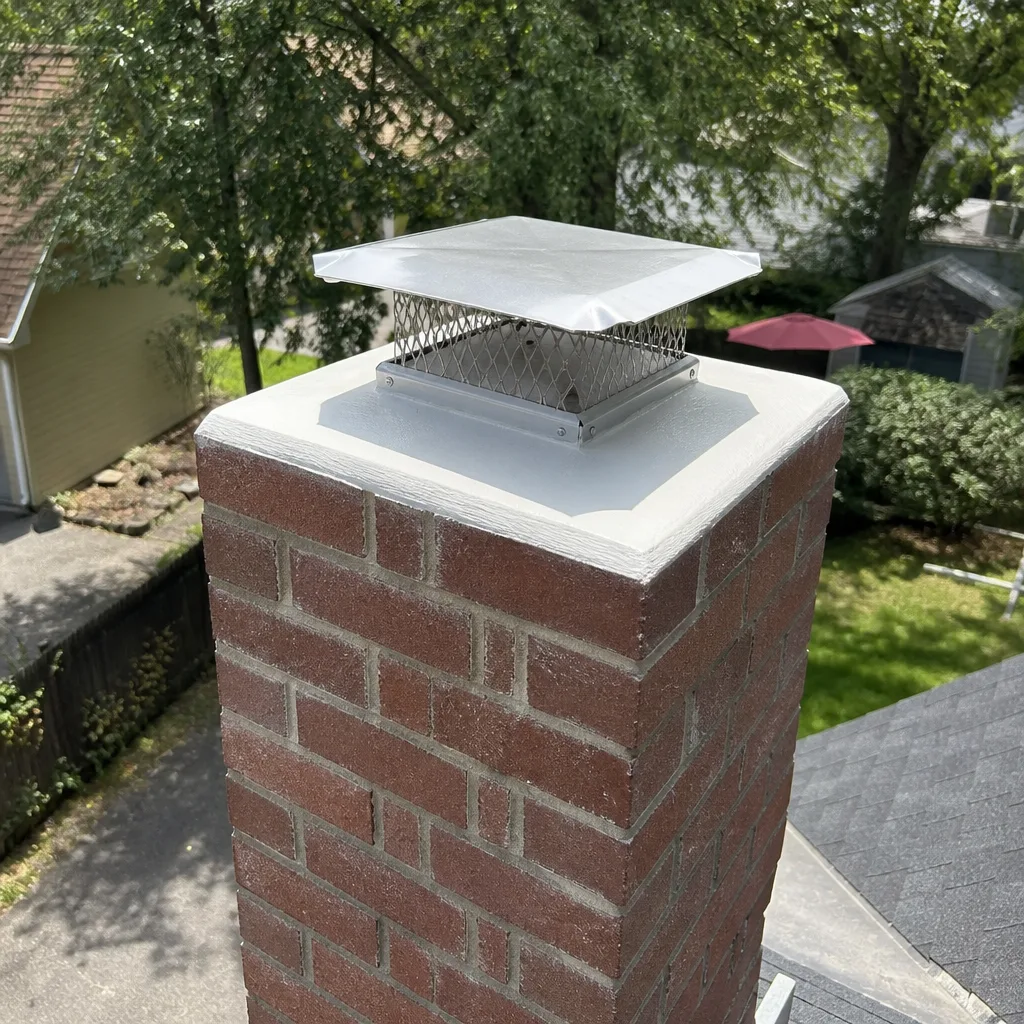 After
After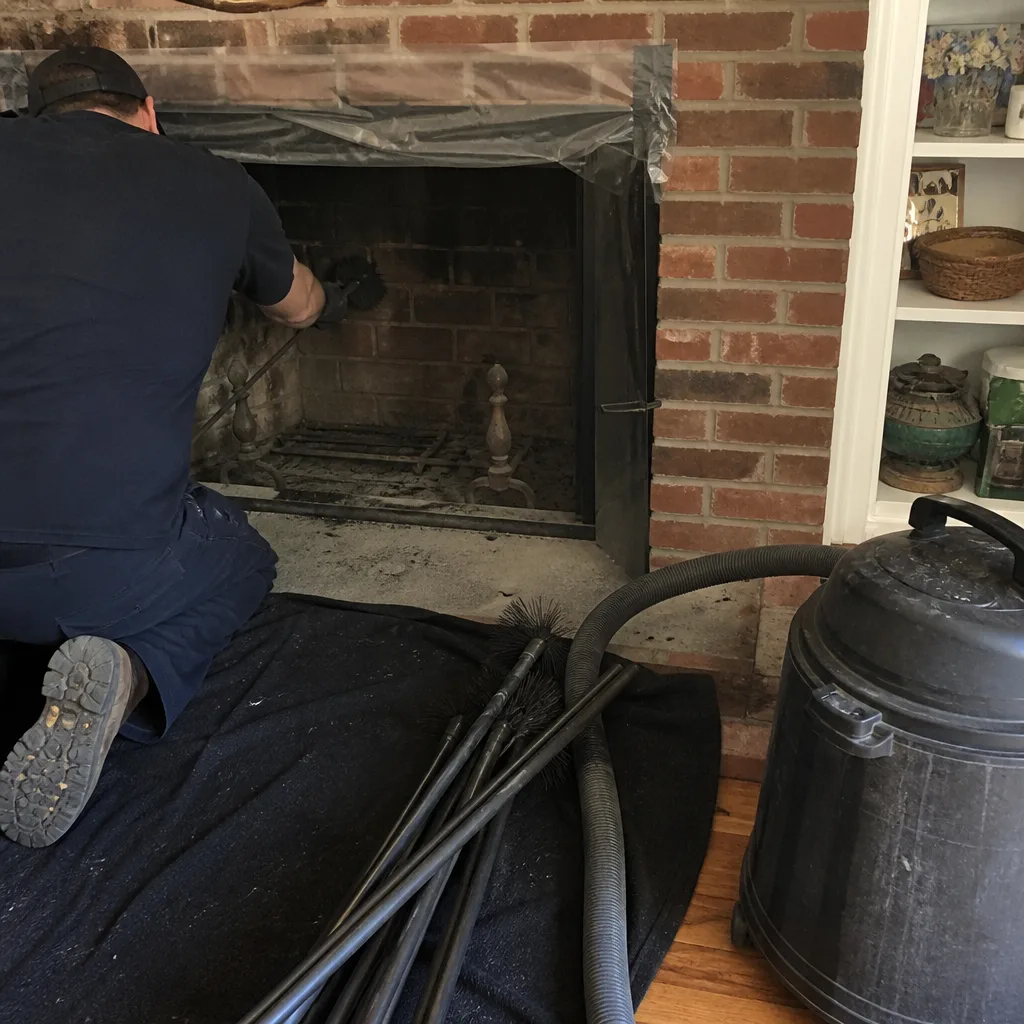 Before
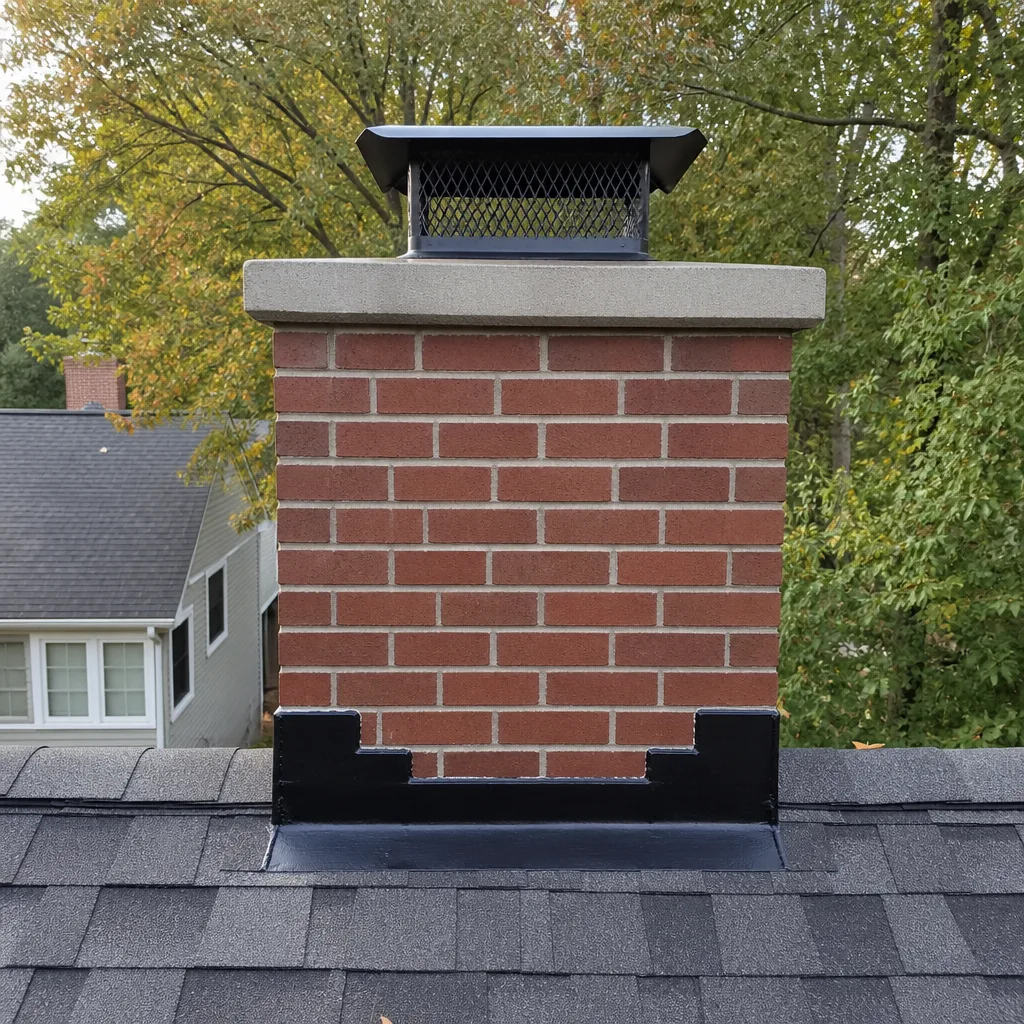 After
AfterHeatShield Flue Liner Replacement: The Quincy Owner’s Guide
A HeatShield flue liner replacement in Quincy typically runs $1,850 to $3,200 installed, depending on the liner length, the flue’s shape, and whether we’re pulling an old HeatShield section or relining from scratch. We keep HeatShield-compatible liner sections and couplers on the truck, so in most cases we can get the job done in a single visit. Most folks discover the liner has failed during an annual sweep, when the camera shows a cracked seam or a separated joint partway up the flue. Sometimes it’s a rust stain bleeding through the brick on the second floor, or a draft that used to pull clean and now hesitates. Either way, by the time you notice it, the liner’s been talking to you for a while.

If you smell smoke in the house after the fire’s out, or you see flakes of metal in the ash pit, don’t wait on it. Call (781) 277-4630 and Wendell or one of his crew will put eyes on it. We’re at the corner of Franklin and Independence most weeks, and we answer the phone like a neighbor, because that’s what we are.
Which HeatShield Models This Applies To
HeatShield’s flue liner system uses a ceramic-modified mortar pumped around an inflatable form, and it’s used on both masonry chimneys and as a repair layer inside existing clay tile liners. The parts that fail – and the parts we replace – are the flue liner sections themselves, the top plate, and the couplers that join the liner to the appliance connector. In Quincy, we see this most often on chimneys serving oil-fired furnaces and older wood stoves, where acidic flue gases have eaten through the original clay tile and someone applied a HeatShield coating as a stopgap.
The compatibility gotcha: HeatShield liners are sized to the flue’s interior diameter, not the outside. So a “6-inch” HeatShield liner might actually be a 6.25-inch interior form, and the top plate has to match that number exactly. If you’re reading a label on your existing liner, look for the embossed series number near the top course. That’s the number we need. If the label’s gone, we measure the flue with a laser during the inspection – takes about two minutes.
On the OEM-vs-aftermarket question: for HeatShield specifically, we stock genuine HeatShield-compatible sections and couplers, and we also carry DuraFlex and Gelco equivalents when the geometry allows. The difference is usually in the coupler design and the ceramic-to-metal bond at the seam. For an oil flue, we’ll always lean OEM – the acid resistance matters. For a wood flue, a quality aftermarket section is often fine, and we’ll tell you that straight.
Signs Your HeatShield Flue Liner Replacement Is Failing
- Rust streaks or white efflorescence on the chimney exterior, especially near the roofline. This is flue gas condensing inside the liner and leaching through the masonry. It means the liner has a gap or crack somewhere above the smoke chamber.
- Flakes of metal or ceramic grit in the firebox or ash pit after a rain. HeatShield’s surface layer spalls when it’s been over-fired or when water has gotten behind the coating. If you see grit, the liner is shedding.
- A draft that used to pull hard and now feels weak, even after a cleaning. A separated joint or a collapsed section narrows the flue passage. Your stove or furnace has to work harder to push exhaust out, and some of it backs up.
- Smoke smell in the house hours after the fire is out, or an odor like burnt metal. This is exhaust finding a seam leak and drifting into the stud bay. In a Quincy colonial, that path runs right to the second-floor bedrooms.
- Condensation or dampness on the flue interior, visible with a flashlight from the cleanout. HeatShield is meant to be impermeable. If water is beading on it, the coating has failed and the underlying clay tile is exposed.
None of these are things you want to let ride through a Quincy winter. Salt air off the harbor accelerates rust on the top plate, and the freeze-thaw cycle does the rest.
Replacement Cost & What’s Included
Here’s the honest breakdown for a HeatShield flue liner replacement in Quincy:
- Single-story flue, straight run, masonry chimney: $1,850 to $2,400 installed. Includes the liner section, couplers, top plate, and rain cap.
- Two-story colonial or multi-offset flue: $2,400 to $3,200 installed. The extra cost is in the access – second-story roof work, a longer liner run, and sometimes a second coupler at the smoke shelf.
- HeatShield patch repair, not full replacement: $400 to $800, if the damage is a single section or seam and the surrounding liner is still sound. We’ll show you the camera footage before we quote this.
Every quote includes the liner, all couplers and clamps, the top plate, the labor to remove and reset the appliance connector, and a full camera inspection after the install so you can see the new liner seated properly. The number Wendell gives you on the phone is the number on the invoice – no surprise line items, no “while we’re up there” add-ons. The work is covered by our 90-Day Done Right Promise. If the liner shifts or a seam opens in the first 90 days, one call brings the crew back at no additional cost. And we’re reachable – a live person answers the phone 24/7, and it may well be Wendell himself.
DIY or Call Us?
Let’s be plain: replacing a HeatShield flue liner is not a weekend project. You’re working on a roof, possibly a steep Quincy gable, pulling sections of liner out of a narrow flue, and if you drop a coupler down the chimney you’ve just made the job twice as hard. The liner sections are also heavy, awkward, and covered in a ceramic coating that sheds dust you don’t want to breathe. This is one of those jobs where we tell people to call, not because we want the work, but because we’ve been called out to fix a DIY attempt that ended with a stuck liner and a cracked flue tile they didn’t know about.
What you can safely do: shine a flashlight up from the cleanout and look for visible cracks or rust at the base. You can also check the top plate from the ground with binoculars – if it’s rusted through or the rain cap is missing, you’ve found a problem. But once you’ve seen something, the next step is a camera inspection. That’s our tool and our expertise. Call (781) 277-4630 and we’ll schedule a time. If it does not need replacing, we’ll tell you that too – the camera doesn’t lie, and neither do we.
FAQs
A properly installed HeatShield flue liner should last 15 to 20 years in this climate. Quincy’s salt air and freeze-thaw cycles chip away at that, and liners serving oil furnaces often fail sooner because of acidic condensate. If you’re at year 12 or 13 and seeing rust streaks, it’s time for an inspection. Call (781) 277-4630 for a camera check – estimates are free.
About half the failures we see in Quincy are repairable with a sectional patch, especially if the damage is at a seam or the top plate. The other half are full replacements because the coating has degraded across multiple sections and patching one area just pushes the problem downstream. The camera tells us which one you’ve got. Call (781) 277-4630 and we’ll show you the footage before we quote anything.
Most replacements in Quincy take four to six hours for a straight single-story flue, and six to eight hours for a two-story colonial with offsets. You’ll have heat again the same evening. We set a real arrival window, and if it slips, we call you – not the other way around. Call (781) 277-4630 to get on the schedule.
Yes. We carry HeatShield-compatible liner sections, couplers, top plates, and rain caps on the truck, plus DuraFlex and Gelco equivalents when the geometry allows. That means most jobs are done in one visit – no second trip, no “parts on order” with the furnace down. Call (781) 277-4630 and we’ll tell you what we’ve got and what we can have by tomorrow morning.
Written by Wendell Pike, Owner, Top Hat Chimney at Top Hat Chimney, serving Quincy and nearby areas.