
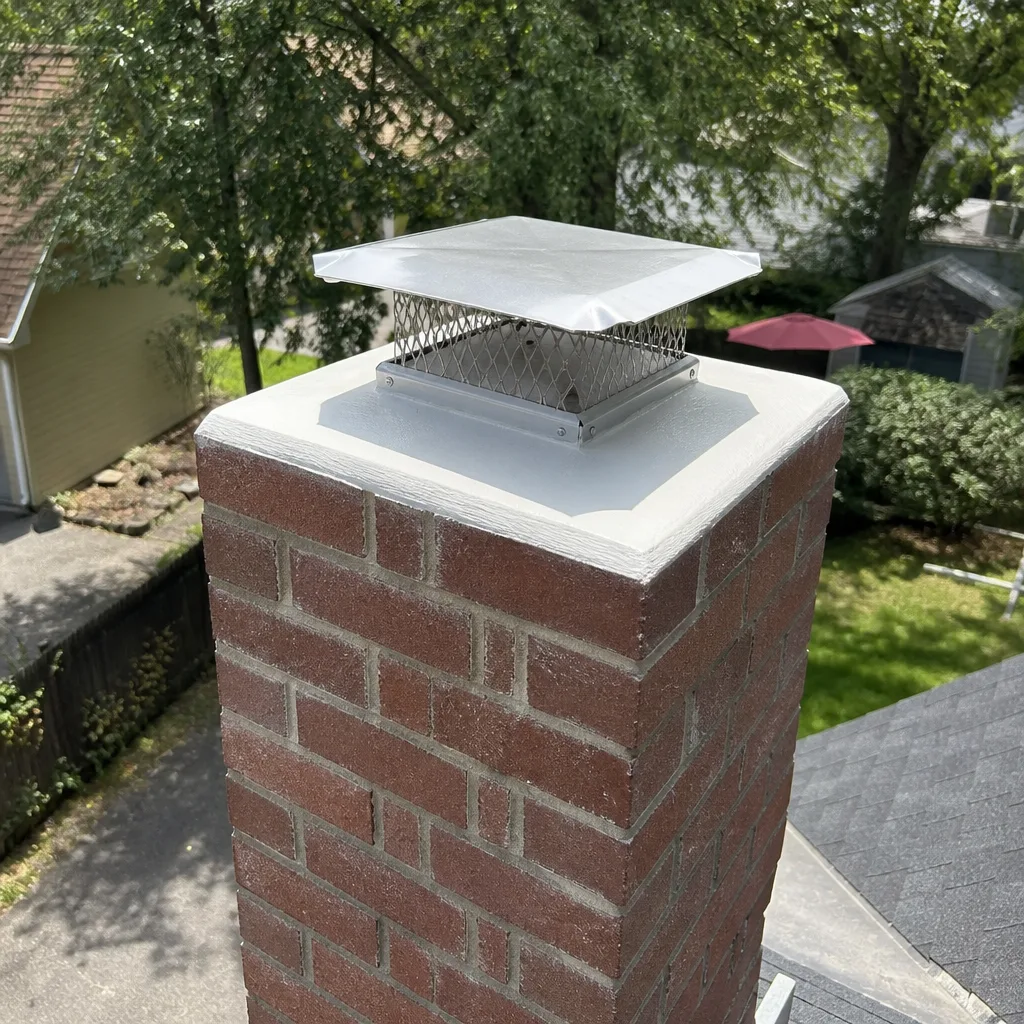
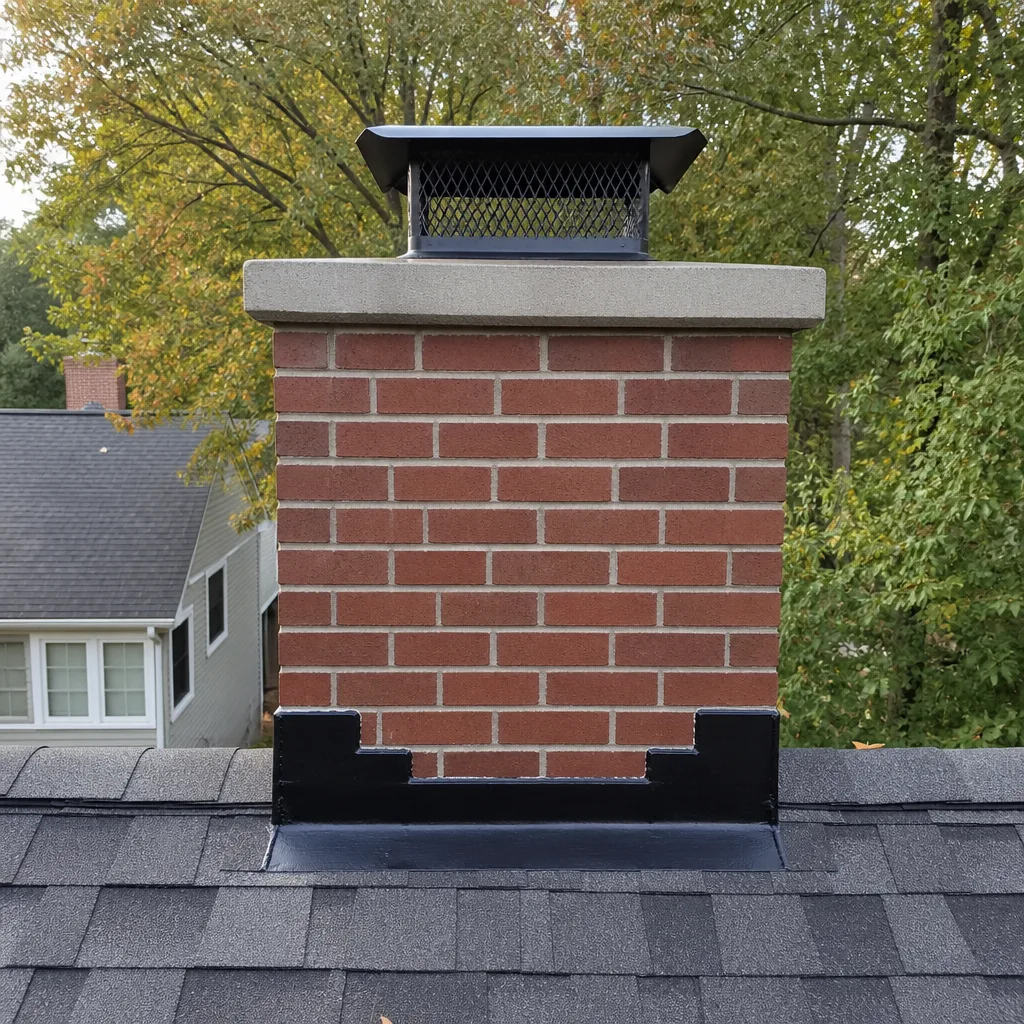
Level 1 sweep and inspection to the NFPA 211 annual standard - flue, crown, cap, and flashing checked and photographed
Chimney sweep logs do not sweep chimneys. They loosen some creosote - which then falls where a brush and vacuum still have to collect it.
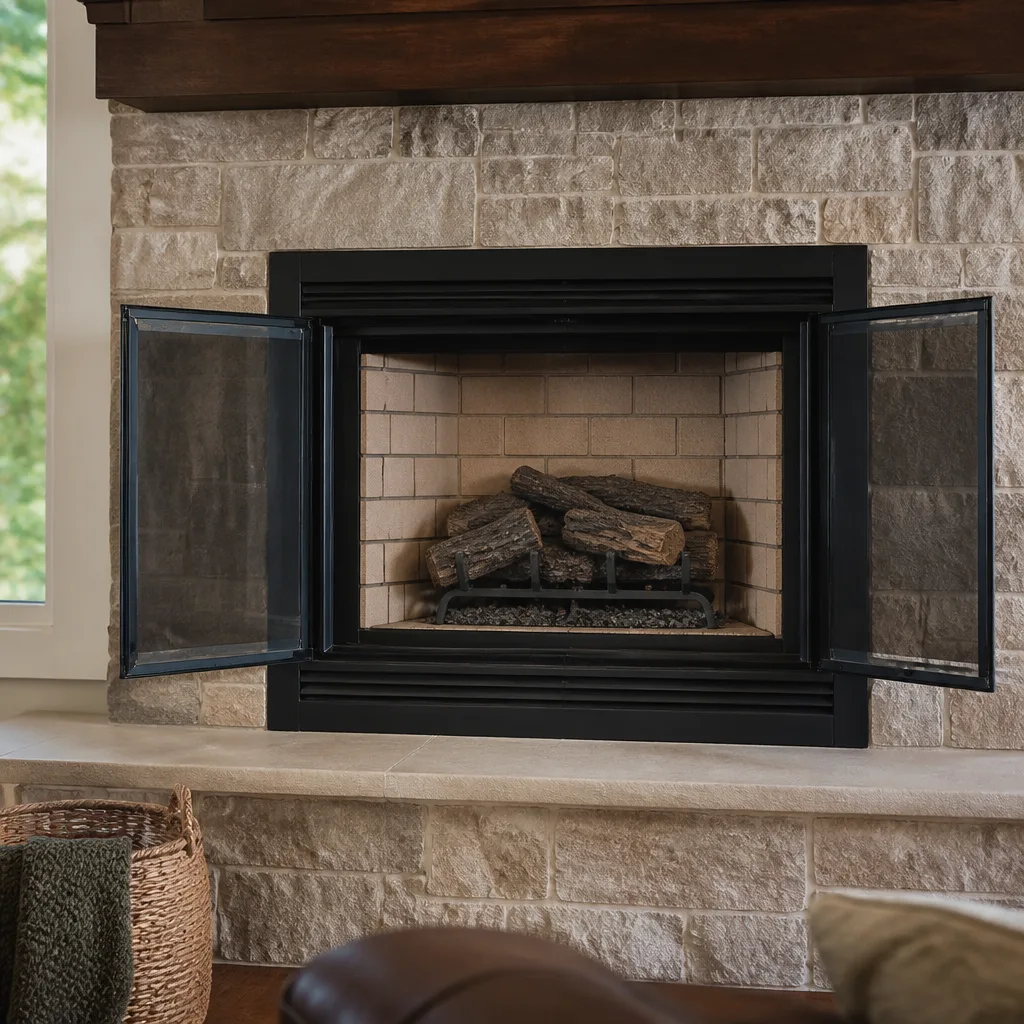
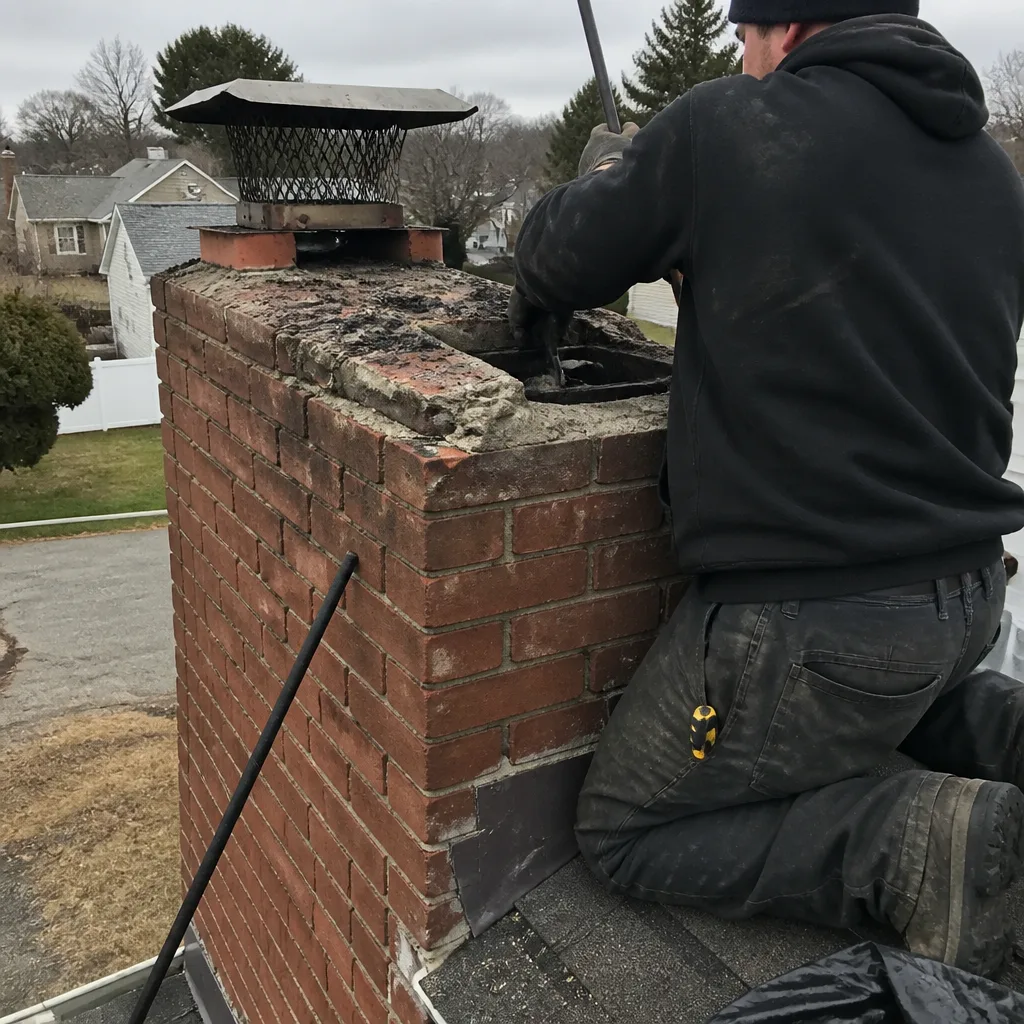 Before
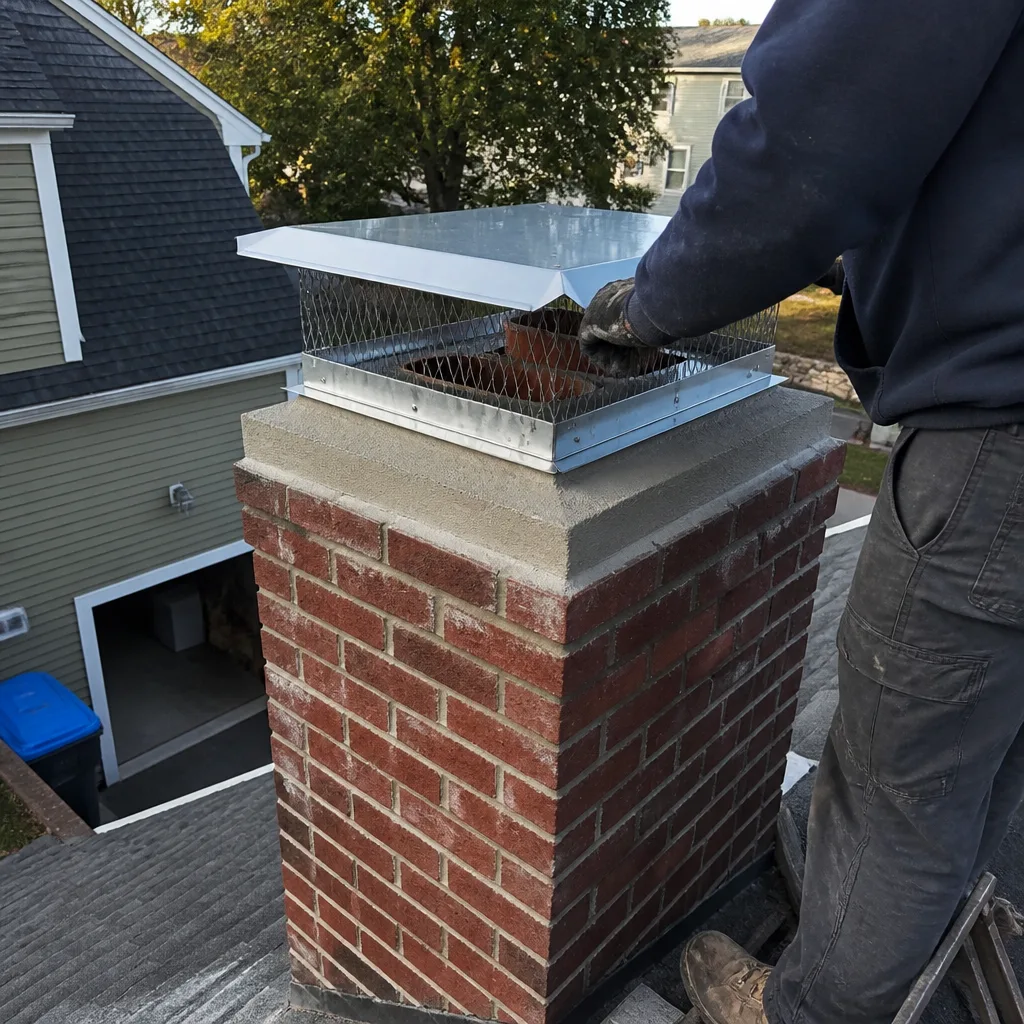 After
After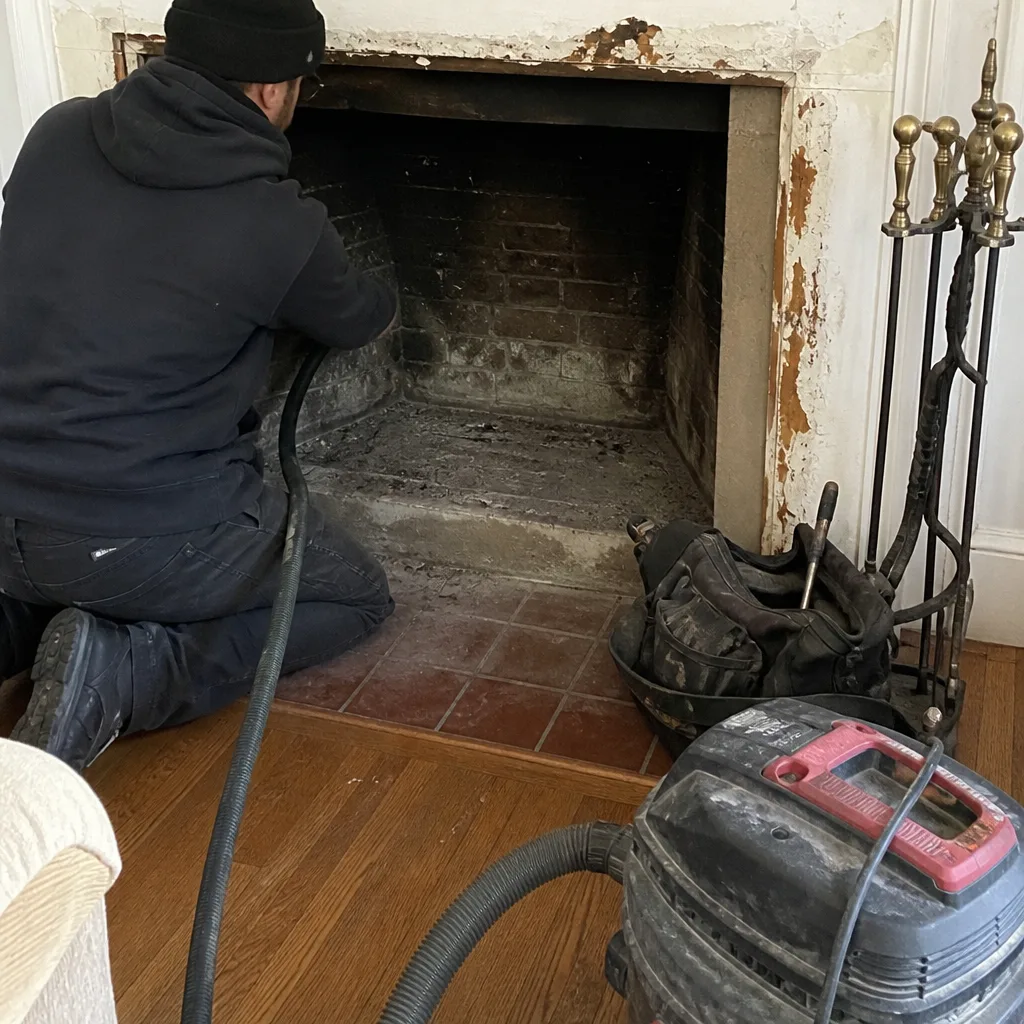 Before
 After
After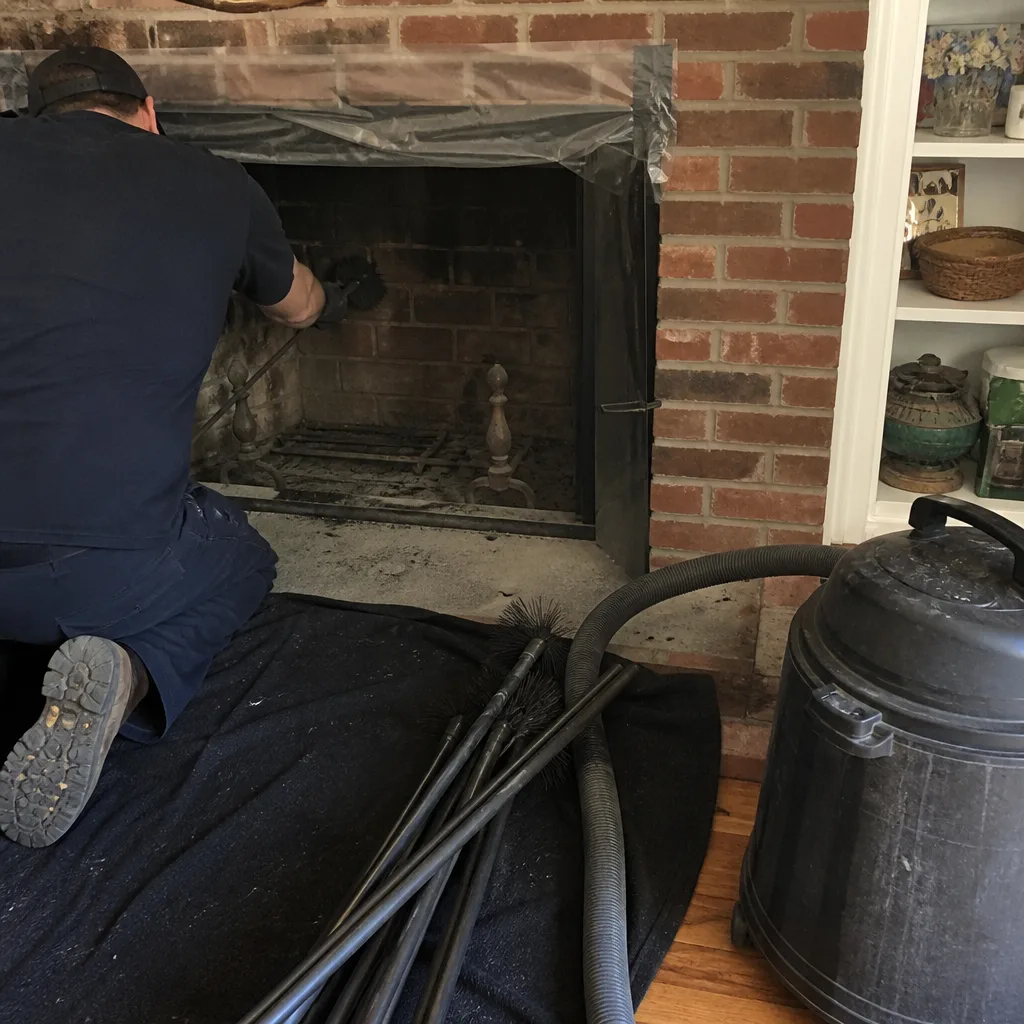 Before
 After
AfterLevel 1 Inspection in Quincy, MA
A Level 1 chimney inspection is a visual examination of all accessible portions of your chimney – the firebox, damper, smoke chamber, flue, and exterior crown and cap – completed without ladders, cameras, or demolition. If your fireplace or heating appliance has been used the same way it always has, with no changes to the fuel type or appliance, and the chimney is operating without obvious problems, a Level 1 is exactly the inspection the National Fire Protection Association says you need once a year. In Quincy, we do them as a standalone service or bundled with a full Chimney Cleaning & Sweep, and the call to schedule one is (781) 277-4630.
Wendell Pike started Top Hat Chimney in 1999, and a fair portion of the chimneys he has looked at over the past 29 years are right here in Quincy – triple-deckers near Wollaston Beach, older Colonials in Merrymount, mid-century ranches up toward Quincy Center. Every one of those structures has its own particular way of building up problems, and a Level 1 inspection is how you catch them before they turn into a liner replacement or a fire. This page is part of our broader Chimney Cleaning & Sweep in Quincy service, and you can learn more about everything we do for Quincy homeowners there.
We quote the price before we open the truck, and that number does not change at the door. Every completed job carries Wendell’s 90-Day Done Right Promise in writing – if something is not right, one call brings us back at no added cost. Seniors and veterans always get 10% off.
When You Need a Level 1 Inspection
The short answer is: an Annual Sweep once a year, every year, whether you burned wood every night this winter or lit the fireplace twice. Chimneys deteriorate in the off-season too. But there are also specific situations that make a Level 1 especially timely.
- You burned regularly this past heating season. Creosote builds up in stages. First-degree is a brush job. Second-degree takes a chemical treatment. Third-degree is a hardened glaze that can hold heat long enough to ignite the surrounding structure. A Level 1 tells you which stage you are at before next fall’s fires begin.
- You just bought the house. Quincy’s older housing stock – particularly the brick Colonials and multi-family homes built between 1920 and 1960 – often has chimneys that have never been inspected or that have had clay tile flue liners patched rather than replaced. A Level 1 gives you a plain-English baseline before you ever strike a match.
- You did not use the fireplace at all this year. A dormant flue is not a safe flue. Birds, squirrels, and water all find their way in through uncapped or poorly capped chimneys. In the Quincy coastal climate, freeze-thaw cycling from November through March accelerates mortar joint deterioration faster than in more inland communities. What looks fine in October can be noticeably worse by April.
- Your insurance carrier or real estate attorney asked for documentation. Level 1 inspection reports are frequently requested during real estate transactions in Norfolk County. We generate a written report with our findings that is usable for disclosure purposes.
- You noticed something different – a smell, a draft, smoke pulling the wrong direction. Negative pressure in tightly weatherized Quincy homes (common after insulation upgrades) can cause backdrafting. A Level 1 will show whether the problem is in the flue or the appliance.
- Your last inspection was more than twelve months ago. The NFPA 211 standard is annual inspection for any chimney connected to a working fireplace or heating appliance – full stop. If you cannot remember when the last one happened, it has probably been too long.
Our Level 1 Inspection Process
Here is exactly what happens when Wendell or one of his crew shows up at your door. No guesswork, no vague promises. You will know what we looked at, what we found, and what – if anything – needs doing next.
- Review your setup before we touch anything. We ask a few quick questions: What fuel do you burn? How often did you use it this season? Any changes to the appliance or the chimney since the last inspection? This takes about five minutes and tells us where to pay extra attention. A Quincy home that switched from oil heat to a gas insert, for example, needs us to look at the liner sizing – a detail that is easy to miss if nobody asks.
- Inspect the firebox, damper, and smoke chamber. We check the firebox for cracks in the refractory panels, the damper plate for warping or corrosion (common in Quincy homes close to the coast, where salt air accelerates metal oxidation), and the smoke chamber for any deterioration of the smoke shelf or parging. We look for creosote accumulation at every accessible point.
- Evaluate the flue from both ends. A Level 1 does not use a camera – that is Level 2 territory – but we do look down from the top of the flue and up from the firebox opening with a high-powered light. We are looking at the interior condition of the liner, checking for obstructions, and assessing whether the flue size is appropriate for the appliance connected to it.
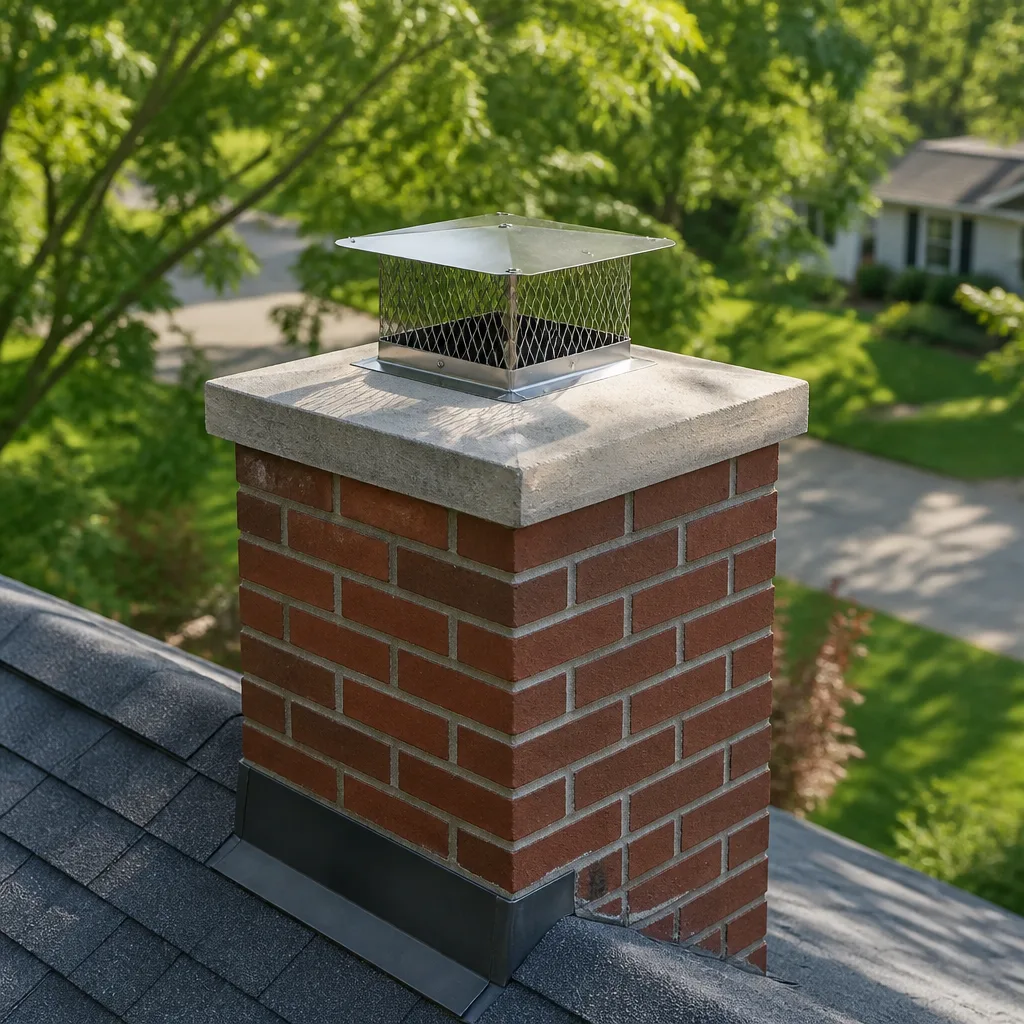
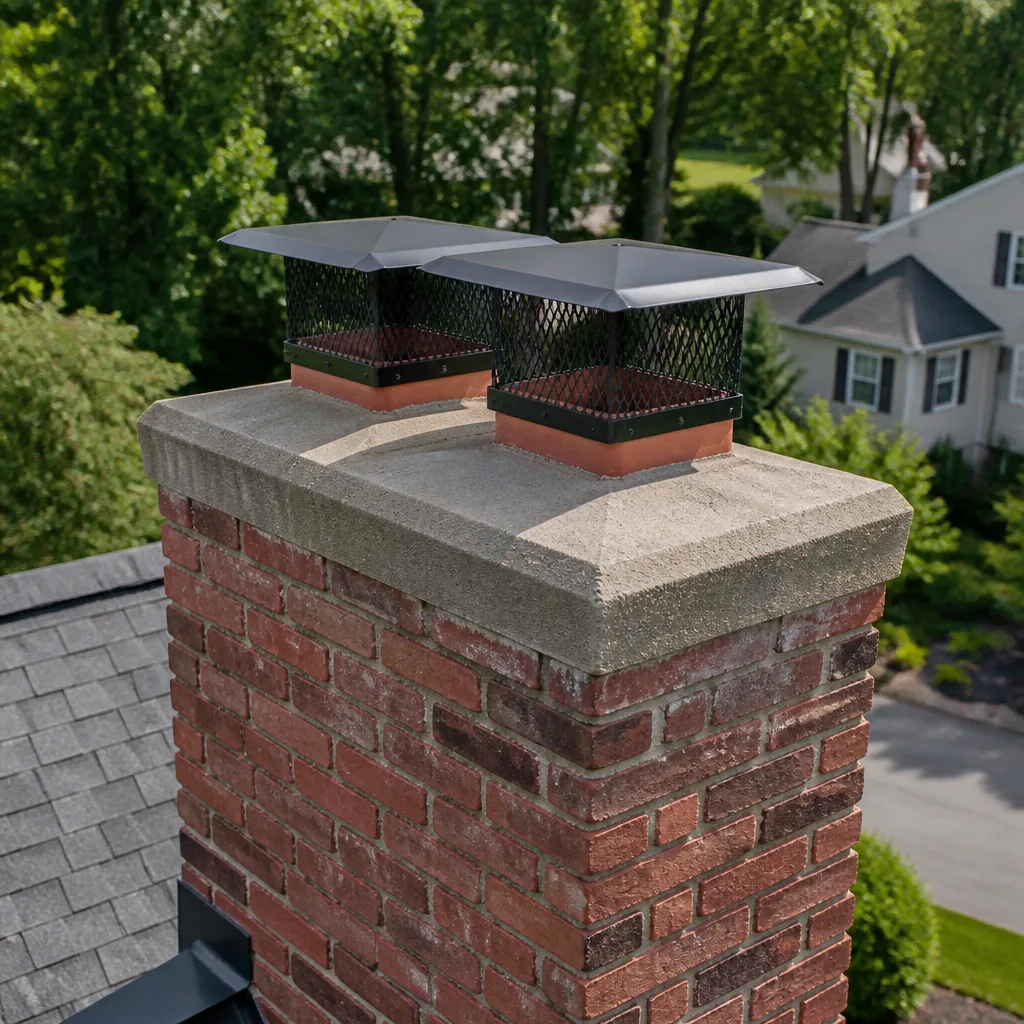
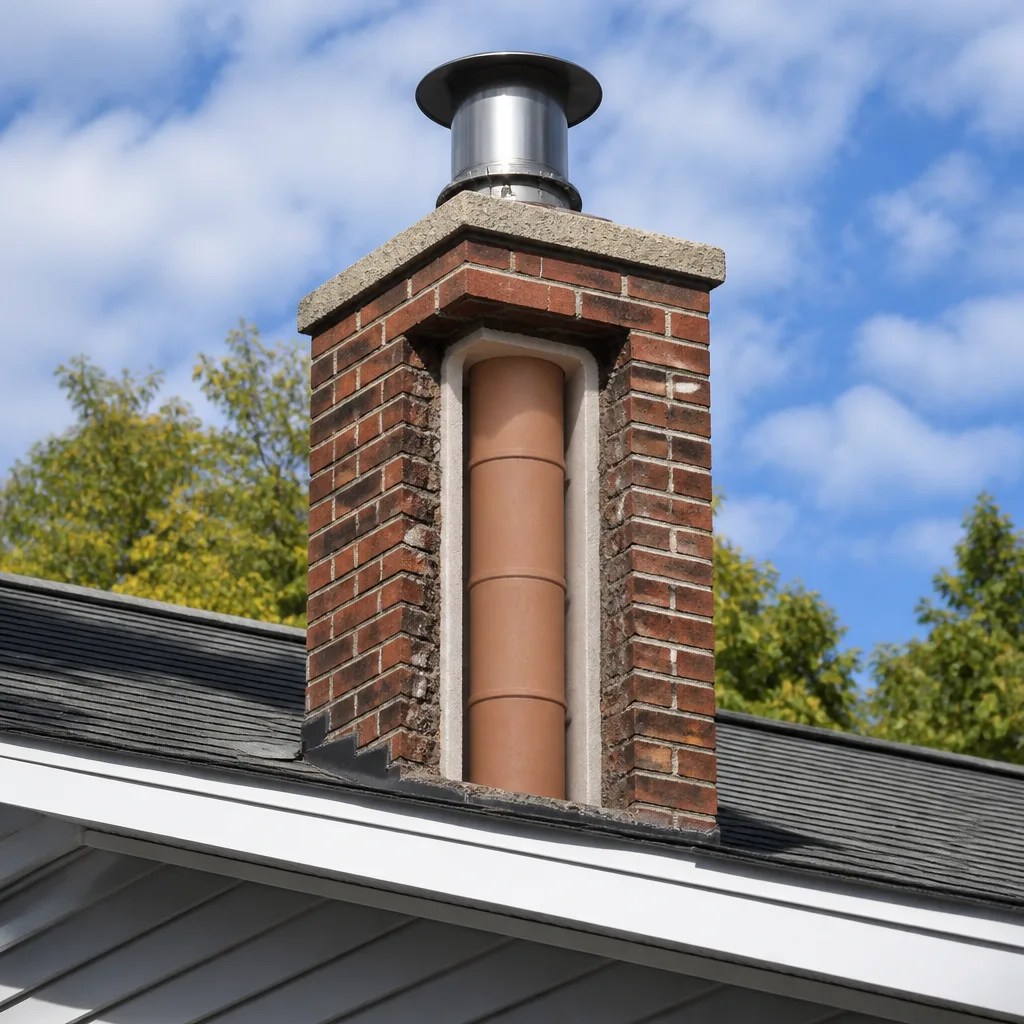
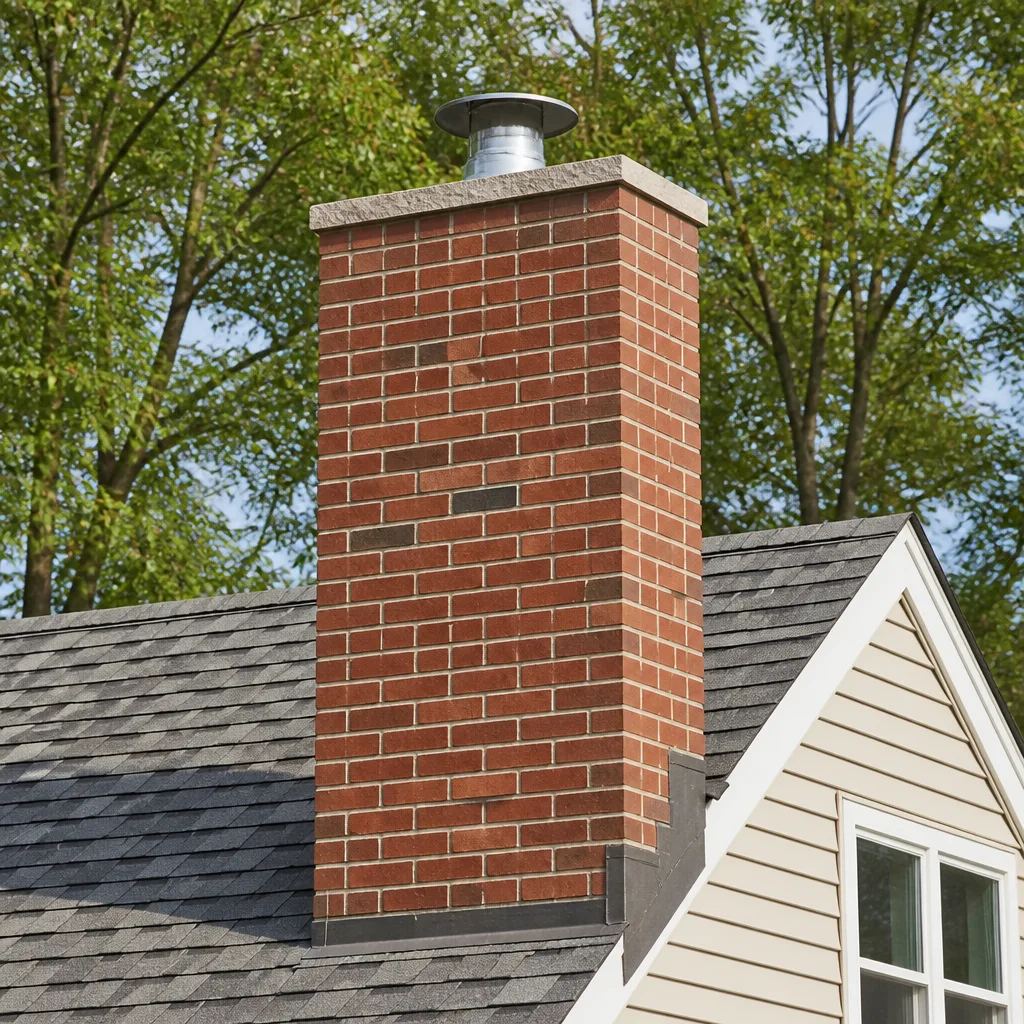
- Examine the crown, cap, and exterior masonry. From ground level and from the roofline if safely accessible, we check the chimney crown for cracking (a very common finding in Quincy after any winter with significant freeze-thaw cycles), the cap for proper fit and mesh condition, and the exterior masonry for spalling brick or failing mortar joints. Missing or damaged mortar is the number one entry point for water in older Quincy chimneys.
- Check the flashing at the roofline. Improperly installed or deteriorated flashing is one of the most common causes of water intrusion in Quincy homes. We check the step flashing, the counter flashing, and any caulking or sealant that is bridging the two. We do not do roofing work, but we will tell you clearly if the flashing is the source of a leak.
- Give you the camera footage and a plain-English verdict. Every Level 1 inspection ends with a written summary of our findings and a direct answer to the question: is this chimney safe to use as-is, does it need cleaning before use, or does something need to be repaired? If repair work is needed, you get the price in writing before we leave. There is no pressure to do it today, and you are always welcome to a free second opinion on any written estimate we produce.
Level 1 Inspection Pricing in Quincy
A Level 1 chimney inspection in Quincy typically runs between $129 and $229 as a standalone service. When bundled with a chimney sweep on the same visit, the combined service generally falls in the $229 to $349 range, depending on the size and condition of the flue.
| Service | Typical Price Range (Quincy, MA) |
|---|---|
| Level 1 Inspection (standalone) | $129 – $229 |
| Level 1 Inspection + Chimney Sweep (bundled) | $229 – $349 |
| Level 1 Inspection + Written Report (for real estate) | $149 – $249 |
| Add-on: Chimney Cap Inspection & Adjustment | $40 – $75 |
A few things affect where your job lands in that range. Chimneys with longer flues or multiple flues take more time. Quincy homes built before 1950 sometimes have unconventional flue configurations – offset runs, unusual tile sizing – that add time to a thorough inspection. Accessibility matters too: a chimney we can reach from a low-slope section of roof is faster to evaluate than one that requires setting up from the ground in a tight side yard.
What does not affect the price: who answers when you call. The number you hear on the phone is the number on the invoice. Period.
If the inspection turns up a repair that runs over $200, you get $40 off that repair automatically. Seniors and veterans get 10% off the whole job, every time, no paperwork required – just mention it when you call. And if you have a written estimate from another company, bring it – we will give you a free second opinion.
Estimates are free. Call (781) 277-4630 and a live person will answer – around the clock, seven days a week.
What Makes Quincy Chimneys Behave Differently
Quincy sits on the coast, and that matters for chimneys. Salt-laden air off Quincy Bay and the Atlantic accelerates the oxidation of metal damper components and corrodes the mortar joints in brick chimneys faster than you would see in a town even ten miles inland. We see this regularly in the Wollaston and Marina Bay neighborhoods, where homes face the water directly or sit close to it.
The freeze-thaw pattern here is also punishing. Quincy’s winters tend to cycle above and below freezing repeatedly rather than staying consistently cold, and every time water that has worked into a mortar crack freezes and expands, it opens the crack a little further. By the time homeowners in Merrymount or Adams Shore notice spalling brick on their exterior chimney wall, the damage has usually been developing for two or three seasons without Soot Removal or other maintenance. A Level 1 every year is the only way to catch that progression early enough for a straightforward repair rather than a partial rebuild.
Quincy also has a high concentration of older multi-family housing, and chimneys in those buildings are frequently shared flues serving multiple appliances – a configuration that creates specific sizing and drafting requirements. If you have a Quincy triple-decker or a converted two-family, mention it when you call, because the inspection checklist for a shared flue is not the same as for a single-family fireplace.
Level 1 vs. Level 2 – Which One Do You Actually Need?
A Level 2 Inspection adds a camera examination of the full length of the flue interior. You need a Level 2 – not a Level 1 – if any of the following apply:
- You are buying or selling the property
- You had a chimney fire, even a small one
- You are changing the fuel type or adding a new appliance
- You are switching from an open fireplace to an insert
- There was an earthquake, a lightning strike, or unusual settlement of the structure
If none of those apply and your appliance and fuel type are the same as last year, a Level 1 is the right tool. We will tell you honestly if what we find during a Level 1 suggests you need a camera. We do not upgrade inspections for revenue – Wendell has been doing this since 1999 and would rather tell you the truth and see you again next year than oversell you once and lose your trust.
Key Takeaways
- A Level 1 inspection is an annual visual check of all accessible chimney parts – required by NFPA 211 for any chimney in regular use.
- In Quincy’s coastal climate, salt air and freeze-thaw cycling make annual inspection more important, not less, even if your fireplace saw light use.
- Standalone Level 1 inspections in Quincy run $129-$229; bundled with a sweep, $229-$349.
- Every inspection ends with a written summary and a plain-English verdict – safe to use, needs cleaning, or needs repair.
- Top Hat Chimney has been doing this since 1999. Wendell’s name and license number are published. The 90-Day Done Right Promise is in writing on every job.
- Seniors and veterans always get 10% off. Any repair over $200 gets $40 off automatically.
FAQs – Level 1 Inspection in Quincy, MA
How much does a Level 1 chimney inspection cost in Quincy?
A Level 1 chimney inspection in Quincy typically costs between $129 and $229 as a standalone service. Bundled with a chimney sweep on the same visit, the combined price usually falls between $229 and $349, depending on the flue size and configuration. Older homes in Quincy Center or Merrymount with longer or offset flues can land at the higher end of that range; a straightforward single-story Colonial fireplace tends to land near the lower end. Call (781) 277-4630 for a free estimate – the number you hear on the phone is the number on the invoice.
How long does a Level 1 inspection take?
Most Level 1 inspections in Quincy take between 45 minutes and 90 minutes from the time the sweep arrives to the time you have a written summary in hand. Single-flue fireplaces on the shorter end, multi-flue or triple-decker setups on the longer end. We give you a real arrival window before the appointment, and we call if it slips.
Do I need an inspection if I only used the fireplace a few times this year?
Yes. Light use still produces some creosote, and even a dormant flue is exposed to weather, wildlife, and the structural movement that Quincy’s freeze-thaw winters cause in mortar joints. The NFPA standard is annual inspection regardless of how much you burned. We see capped chimneys in Quincy every spring with nesting debris that built up over a single mild winter – an animal blockage does not care how rarely you light a fire.
Can I get a Level 1 inspection report for a real estate transaction in Quincy?
Yes. We generate a written inspection report that documents the condition of all accessible components and clearly states whether the chimney is safe for use, needs cleaning, or needs repair. This is the format typically requested during real estate transactions in Norfolk County. If your attorney or buyer’s agent needs a specific form or format, call us first and we will confirm whether what we produce will meet that requirement. Reports are included with every Level 1 inspection – no added fee for the paperwork.
Ready to Schedule? Call Top Hat Chimney Today
If your Quincy chimney has not had a Level 1 inspection in the past twelve months, this is the right time to get one on the calendar. Spring is a good window – the heating season is over, any damage from winter freeze-thaw is fresh and easier to evaluate, and you have time to address anything before fall. We are part of the broader home service community in this area and have been since 1999. Call (781) 277-4630 to schedule. A live person answers around the clock. The estimate is free, the price is upfront, and the 90-Day Done Right Promise is on every job – in writing.
Written by Wendell Pike, Owner at Top Hat Chimney, serving Quincy.